

Stone Tree: The most famous natural sculpture in the Bolivian desert
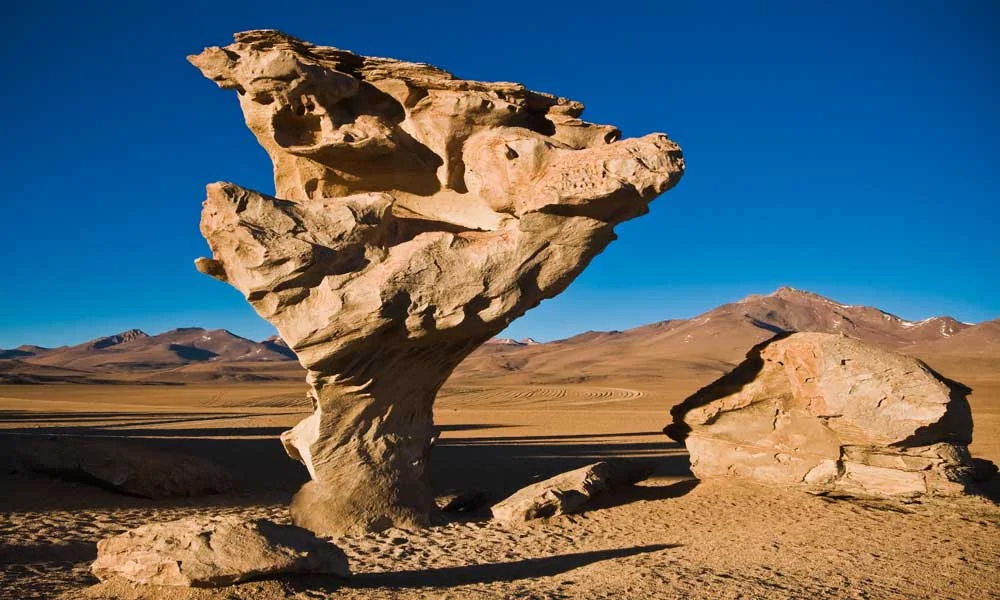
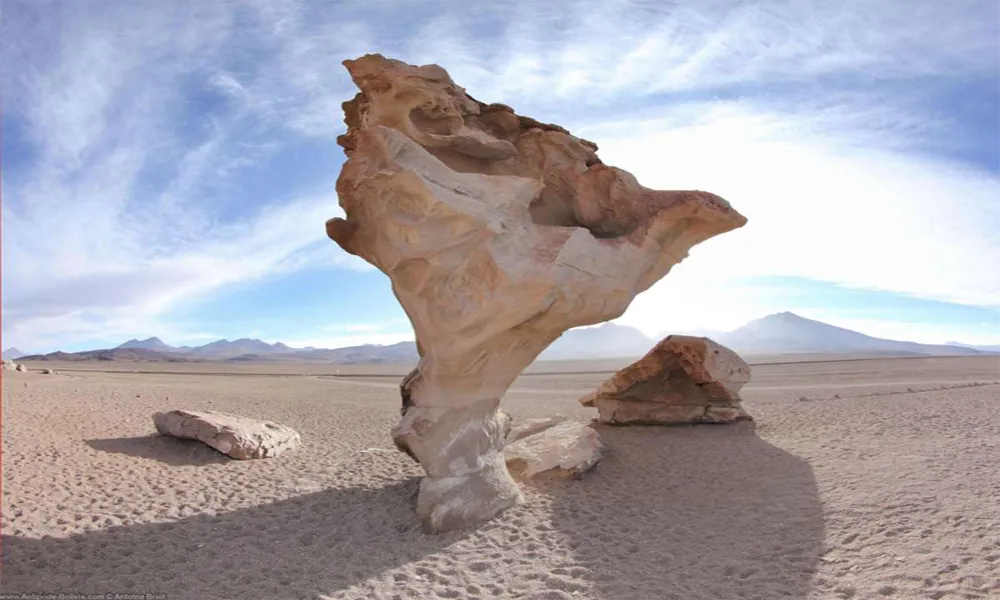
The Stone Tree is one of the most striking and recognizable rock formations in southwestern Bolivia. In the middle of the desolate Siloli Desert, this volcanic rock formation seems to defy logic: a solitary stone “tree,” bent by the wind, standing upright in one of the most extreme environments on the planet.
More than just a photo opportunity, the Stone Tree is a symbol of the power of nature, of constant erosion, and of geological time that has shaped the Andean landscape for thousands of years.
📍Exact Location of the Stone Tree
The Stone Tree is located within the Siloli Desert, in the Eduardo Avaroa Andean Fauna National Reserve, Potosí Department, in the Sud Lípez region.
Altitude: approx. 4,300 m above sea level.
Region: Sud Lípez, Bolivia
Access: exclusively through organized tours
Visit time: 20 to 30 minutes
Its remote location keeps the environment virtually untouched, with no visible tourist infrastructure.
🏜️The Siloli Desert: an extreme landscape
The Stone Tree rises in the heart of the Siloli Desert, considered one of the driest and coldest deserts in the world.
Environmental characteristics:
- Volcanic and sandy soils
- Constant and very strong winds
- Extreme temperatures (below freezing even during the day)
- Almost total absence of vegetation
- Lunar-like landscape
This harsh environment further highlights the presence of the Stone Tree, which seems to stoically withstand the extreme conditions of the high plateau.
🌋 Rock composition and texture
The formation is composed mainly of volcanic rock, from ancient eruptions that shaped the Bolivian highlands.
Upon closer inspection, the following can be observed:
- Irregular textures
- Eroded layers
- Gray and brown tones
- A rough surface, sculpted by the wind
Every crack and shape is a direct mark of the area’s extreme climate.
⏰ Best time to visit the Stone Tree
Mid-morning: clear light and intense blue skies
Afternoon: soft shadows and warm colors
Dry season (April – November): more stable paths
During the rainy season, wind and terrain can make the visit difficult.
🎒 Practical tips for your visit
- Wear thermal clothing and a windbreaker
- Bring a hat, gloves, and a scarf
- Protect yourself from the sun with sunscreen and UV sunglasses
- Walk slowly due to the altitude
- Stay hydrated
- Do not climb or lean on the rock
The wind can be very strong; maintain a steady balance.
⚠️ Altitude, climate, and acclimatization
At over 4,300 meters above sea level, the body faces:
- Dry air
- Lower oxygen levels
- Intense cold
- Possible altitude sickness
It is recommended to acclimatize beforehand in Uyuni or San Pedro de Atacama.
❓ Frequently Asked Questions about the Stone Tree
- Can I touch the Stone Tree?
You can observe it closely, but you cannot climb it.
- How long is the stop?
Between 20 and 30 minutes.
- Is it dangerous?
No, as long as you follow the guide’s instructions.
- Is it included in all tours?
In most tours that visit Sud Lípez.