
Uyuni Village – Complete Guide for Travelers
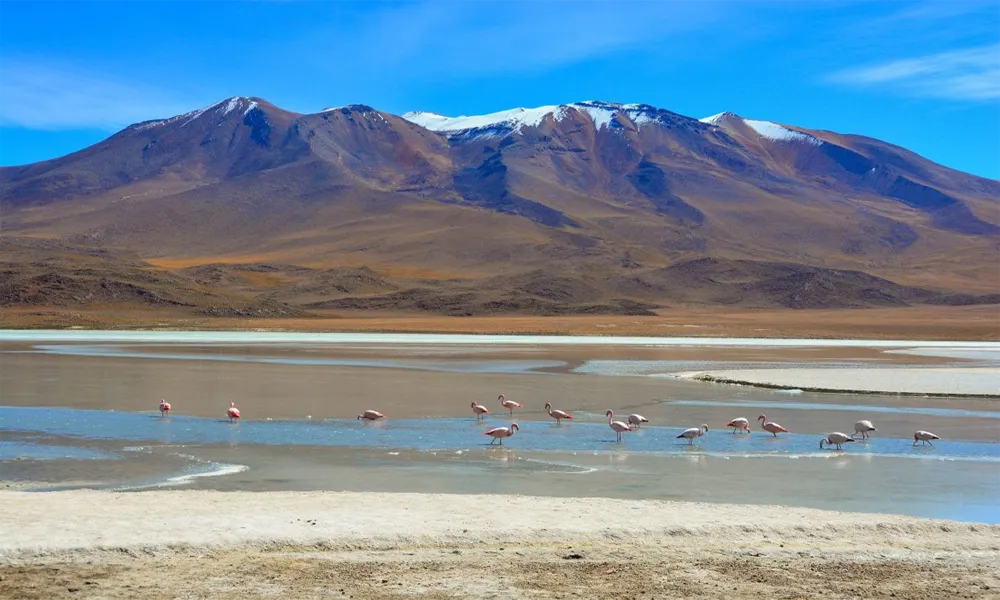
The town of Uyuni is where it all begins. For thousands of travelers each year, Uyuni is the gateway to the world’s largest salt flat; however, this high-altitude city is much more than just a logistics hub. Uyuni embodies railway history, Andean resilience, and adaptation to modern tourism, all set in one of South America’s most extreme environments.
Located high in the Bolivian Altiplano, the town of Uyuni reflects daily life at altitude, marked by the cold, the wind, and a strong cultural identity tied to mining, the railway, and the Salar de Uyuni.
📍Location and Geography of the Town of Uyuni
Uyuni is located in southwestern Bolivia, in the department of Potosí, at an approximate altitude of 3,670 meters above sea level.
Natural Region: Bolivian Altiplano
Distance from La Paz: approx. 550 km
Climate: Cold, dry, and windy
Environment: High Andean plains and deserts
Its strategic location made Uyuni the main connecting hub between the Salar de Uyuni, Sud Lípez, and the routes to Chile.
🕰️Origin and history of the town of Uyuni
🚂 The railway’s birth in Uyuni
Uyuni was officially founded at the end of the 19th century, during the railway boom in Bolivia. The city emerged as an important railway center, designed to connect the rich mines of Potosí and Oruro with the Pacific ports.
This role made Uyuni:
- A key point for mineral transport
- A center for commerce and services
- A meeting place for workers and migrants
The locomotives, workshops, and stations profoundly shaped the town’s identity.
📉 Decline of the Railway and Social Transformation
With the mining crisis and the gradual abandonment of the railway system, Uyuni went through a period of economic stagnation. Many families emigrated, and much of the infrastructure became obsolete.
However, the emergence of international tourism to the Salar de Uyuni, especially from the late 20th century onward, spurred a second phase of growth, this time linked to the service sector.
🏙️ Uyuni Today: A Functional and Tourist City
Today, Uyuni is a small but dynamic city, primarily geared toward tourism.
Urban Characteristics:
- Straight, flat streets
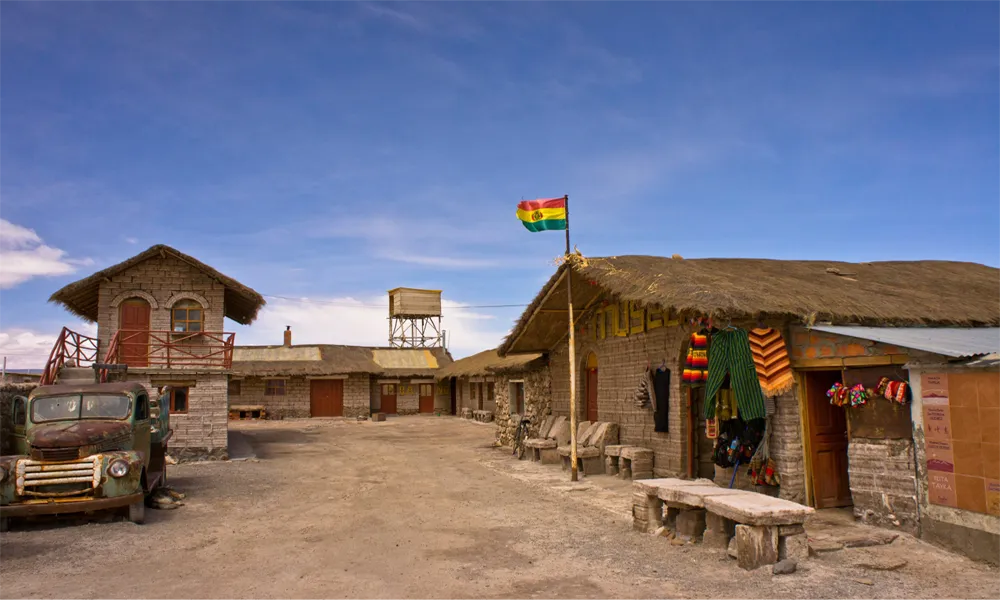
- Simple and functional architecture
- Commerce focused on travelers
- Relaxed pace, even in peak season
It is not a monumental city, but it plays a key role as a center for organization, rest, and supplies.
🗺️ Main Tourist Attractions of the Town of Uyuni
🚂 Train Cemetery
Located just minutes from the town center, it is the historical symbol of Uyuni and one of the most photographed sites in Bolivia.
🏛️ Plaza Arce
The central square where daily life unfolds: fairs, meetings, and local celebrations.
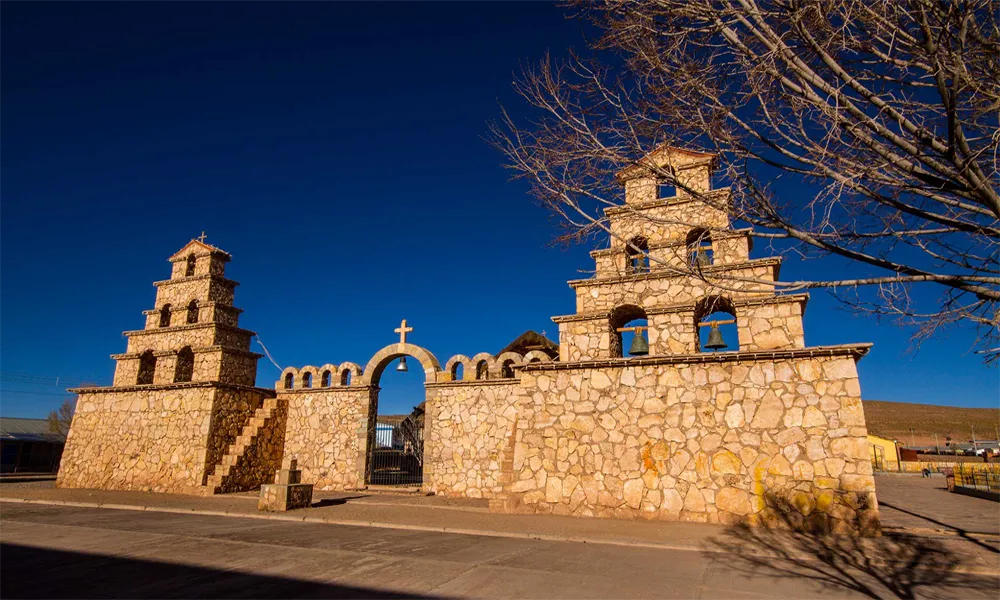
⛪ San Cristóbal Church
A simple church that reflects the religiosity and traditional architecture of the Altiplano.
🛍️ Markets and Fairs
Ideal for discovering Andean products, handicrafts, and local foods.
🍽️ Typical Uyuni Cuisine
Uyuni’s cuisine reflects the cold climate and high altitude.
Traditional Dishes:
- Quinoa soup, nutritious and comforting
- Llama meat, roasted or stewed
- Salteñas, very popular
- Dishes made with potatoes, corn, and Andean grains
In recent years, restaurants with international options adapted to tourism have emerged.
🏨 Accommodation in Uyuni
Uyuni offers a wide range of hotels:
- Budget hostels
- Mid-range hotels
- Boutique hotels
- Salt hotels (on the outskirts of town)
Most are located near the town center, travel agencies, and bus terminals.
⚠️ Climate, Altitude, and Daily Life
Life in Uyuni is marked by extreme conditions:
- Nights below freezing for much of the year
- Dry air and low humidity
- High solar radiation
- Frequent winds
The local population has developed a strong cultural and social adaptation to these conditions.
🎒 Practical Tips for Visiting Uyuni
- Acclimate for at least 24 hours
- Bring thermal clothing and a windbreaker
- Exchange cash
- Buy water and snacks before your tour
- Protect your skin from the sun
🌱 Responsible Tourism in Uyuni
The growth of tourism has generated both opportunities and challenges.
Practicing responsible tourism involves:
- Supporting local businesses
- Choosing registered tour operators
- Reducing waste
- Respecting local culture and customs
The future of Uyuni depends on conscious and sustainable tourism.
❓ Frequently Asked Questions about the town of Uyuni
- How many days should I stay in Uyuni?
Ideally, you should stay one night before and one night after the tour.
- Is it an expensive city?
No, it’s affordable compared to other tourist destinations.
- Is there internet access?
Yes, although the speed can vary.
- Is it safe?
Yes, it’s a peaceful city.