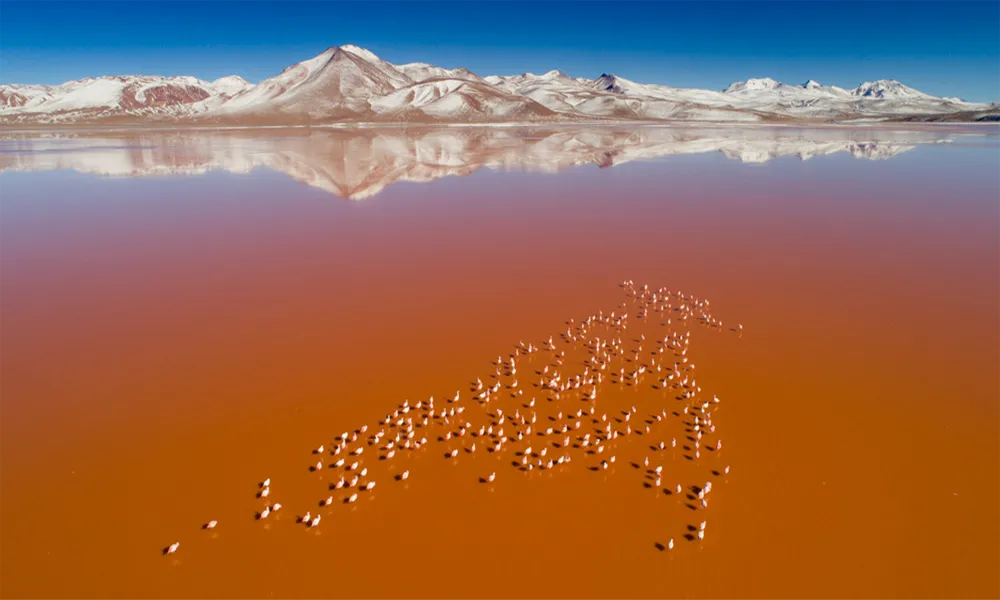

Incredible Lagoons in Uyuni – A Natural Treasure of Colors and Reflections
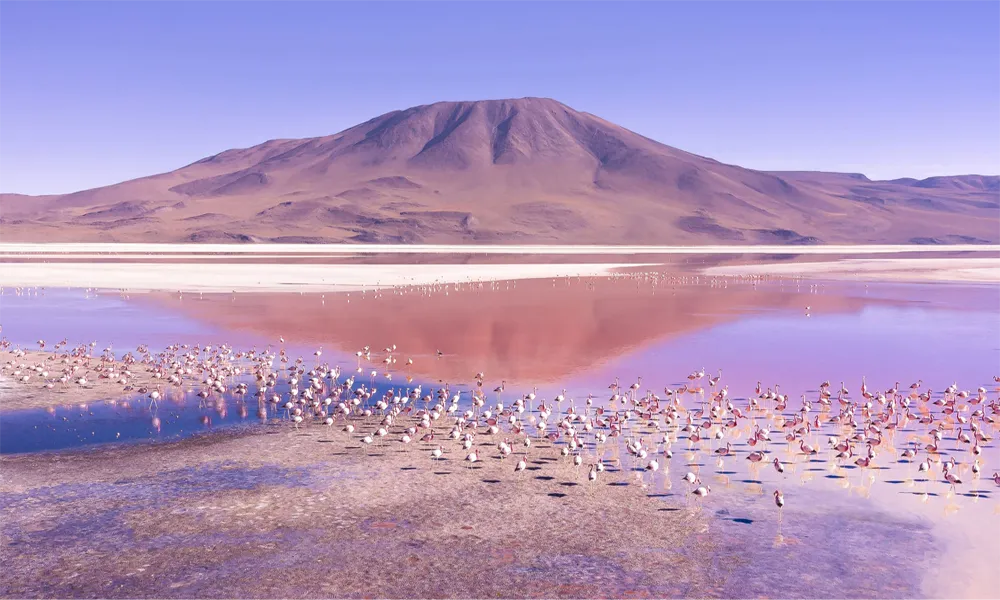
The Salar de Uyuni in Bolivia is not only famous for its vast white expanse and mirror-like effect, but also for its high-altitude lagoons that surprise visitors with their colors, biodiversity, and unique landscapes. These lagoons are located at high altitudes, surrounded by volcanoes, mountains, and rock formations, forming part of one of the most impressive tourist routes in the southern highlands.
📍 Main Incredible Lagoons in Uyuni
1. Laguna Colorada (Red Lagoon)
- Location: Eduardo Avaroa Andean Fauna National Reserve.
- Main attraction: Its reddish waters, a product of sediments and microscopic algae, change hue depending on the time of day.
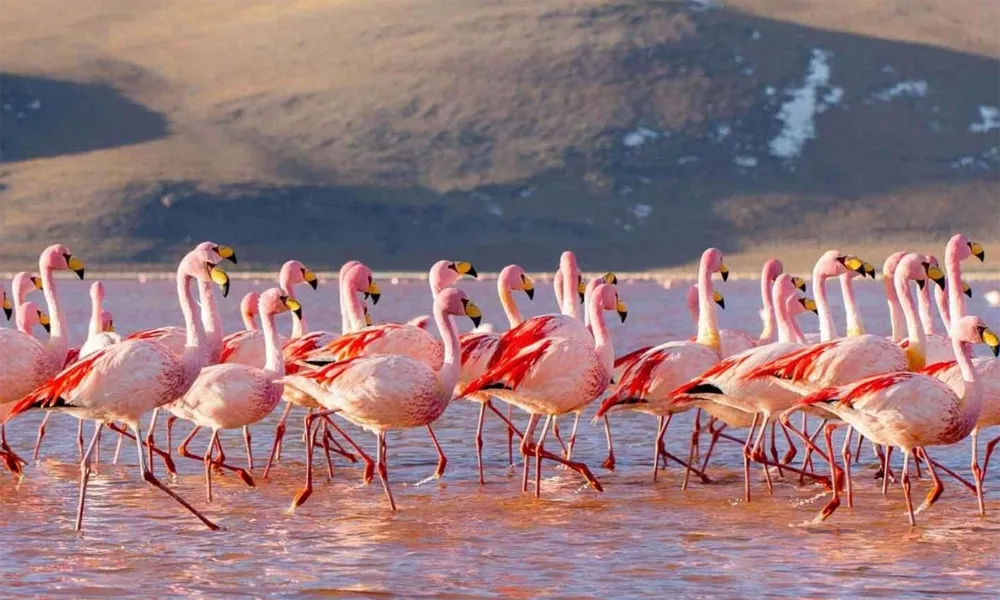
- Notable fauna: Three species of Andean flamingos, foxes, viscachas, and ducks.
- Must-see: The contrast between the red of the water, the white of the borax, and the blue of the sky.
2. Laguna Verde (Green Lagoon)
- Location: At the foot of the Licancabur volcano, near the border with Chile.
- Main attraction: Its emerald green color, caused by minerals such as arsenic and magnesium.
- Unique experience: The color change is more intense with the wind, which stirs up the sediments.
3. Laguna Blanca (White Lagoon)
- Location: Next to Laguna Verde (Green Lagoon).
- Main attraction: Its whitish color due to the high concentration of minerals.
- Surroundings: An almost lunar landscape, with perfect reflections of the mountains.
4. Laguna Hedionda (Stinking Lagoon)
- Location: Route to the Eduardo Avaroa National Reserve.
- Main attraction: Shallow waters with a strong sulfur smell and a large number of flamingos.
- Photo tip: Sunrises and sunsets with birds in the foreground.
5. Laguna Honda (Deep Lagoon)
- Location: Between Laguna Hedionda and the Siloli Desert.
- Main attraction: Deep blue color, surrounded by mountains and grasslands where vicuñas graze. 6. Chiar Khota Lagoon
- Location: Near the Cordillera de los Frailes mountain range.
- Main attraction: Its name means “black lagoon” in Aymara, due to the contrast of its waters with the surrounding landscape.
🐦 Biodiversity
Despite the extreme conditions of the Bolivian Altiplano—altitudes exceeding 4,000 meters above sea level, low temperatures, and high salinity—the Uyuni Lakes harbor a unique and highly adapted biodiversity.
Notable Fauna
The lakes are one of the most important ecosystems for high-Andean birds:
- Andean, Chilean, and James’s flamingos, especially in
- Laguna Colorada, Hedionda, and Cañapa.
- Vicuñas, visible in open areas near the lakes.
- Andean foxes, discreet but present in less frequented areas.
Migratory birds such as Andean gulls, ducks, and plovers.
The Andean rhea, occasionally observed in nearby plains.
High Andean Flora
Vegetation is sparse but vital to the ecosystem:
- Yareta, an ancient plant that grows slowly on volcanic rocks.
- Tough grasses and coarse pastures, essential for the diet of camelids.
- Microscopic algae, responsible for the red, green, and turquoise colors of several lagoons.
🚗 How to Get There
- From Uyuni: Access is via 4×4 tours that travel across the salt flats and the southern part of the Eduardo Avaroa Reserve.
- Recommended duration: 3 to 4-day tours to visit several lagoons and nearby attractions.
- Best time to visit: May to November (dry season) for clear skies, or December to March for more intense color and reflections.
👌Recommendations
To fully enjoy the tour of the high-altitude lagoons, it is important to keep the following recommendations in mind:
Before your trip
- Acclimate for at least 1 or 2 days in Uyuni or San Pedro de Atacama.
- Avoid alcohol and heavy meals before the tour.
- Book with authorized agencies experienced in high-altitude routes.
What to bring
- Layered thermal clothing (base layer, fleece, and windbreaker).
- Waterproof jacket, hat, gloves, and scarf. Sunglasses with UV protection and sunscreen.
- Water, energy snacks, and candies for altitude sickness.
- Extra batteries or a power bank (the cold quickly drains devices).
During the tour:
- Walk slowly and avoid strenuous activity.
- Keep your distance from flamingos and other wildlife.
- Always follow the guide’s instructions.
- Do not remove rocks, plants, or any other natural debris.
❓Frequently Asked Questions about the Uyuni Lagoons
- Where are the Uyuni Lagoons located?
The main lagoons are located south of the Salar de Uyuni, within and around the Eduardo Avaroa National Reserve, in southwestern Bolivia.
- Can I visit the lagoons without a tour?
It is not recommended. The distances are long, the roads are not marked, and a 4×4 vehicle and experience driving at high altitudes are required.
- Which is the most famous lagoon in Uyuni?
Laguna Colorada is best known for its intense red color and large concentration of flamingos.
- When are the most flamingos seen?
They are most prevalent between April and November, during the dry season, when conditions are more stable.
- Is it very cold at the lagoons?
Yes. Temperatures can drop to -10°C at night and range between 5°C and 15°C during the day.