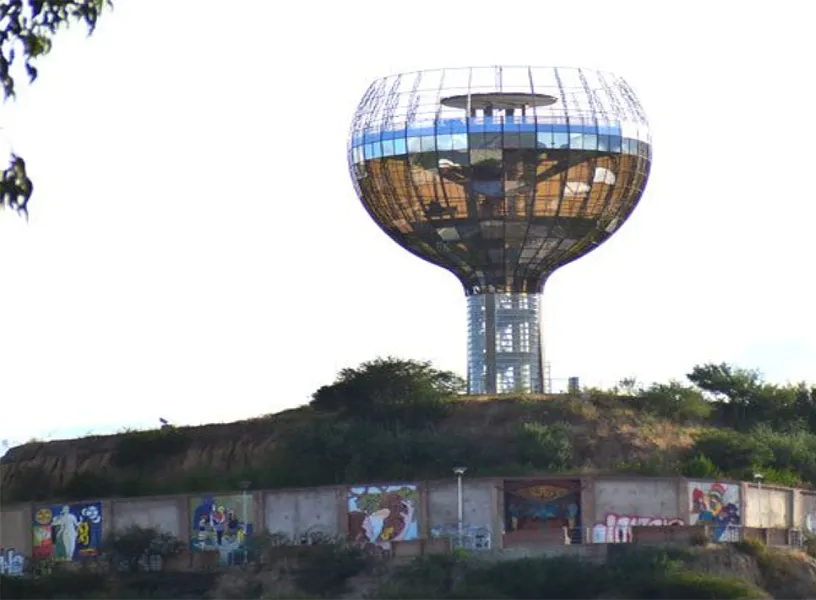


Lookout of Dreams: A Balcony to the Heart of the Valley
✨ A Welcome to the Landscape
The Mirador de los Sueños (Lookout of Dreams) sits atop a hill overlooking part of the city and valley of Tarija, in southern Bolivia. It’s not just a spot for taking photos: it’s a space created for contemplation, relaxation, and connecting with nature in a city that combines tradition, a pleasant climate, and natural beauty.
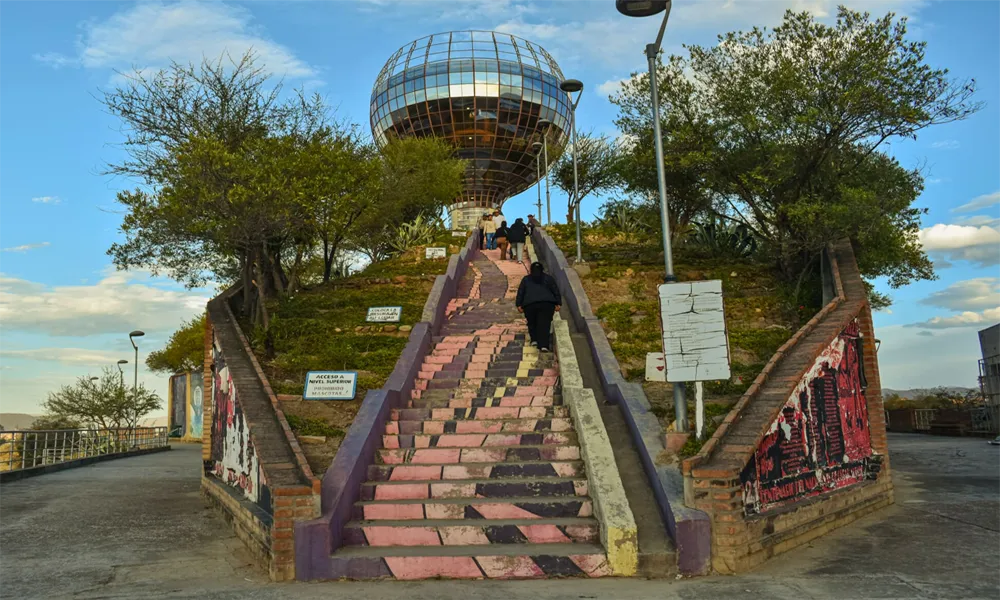
From the moment you begin the ascent, you’ll feel a change: the noise of the city center fades, and the aromas of the earth, the breeze, and the distant birdsong take center stage. The viewpoint is designed as a series of platforms; steps and seating areas allow you to pause and admire the various vantage points.
📌Location and How to Get There
The Mirador de los Sueños is located a few kilometers from the center of Tarija, making it an easily accessible destination for both locals and tourists. How to get there:
- 🚗 By car or taxi: the trip from the city center takes between 15 and 20 minutes.
- 🚌 By public transport: several minibus and bus lines pass near the area.
- 🚶 Excursions or hikes: it can be included in guided tours of the city and its surroundings.
🌤️ Climate in the area
Tarija has a temperate climate for most of the year, with warm summers and mild winters. At the Mirador de los Sueños (Lookout of Dreams), the best time to visit is at sunset, when the sky is painted with vibrant colors and the panoramic view reaches its peak.
🏞️ What to see from the Lookout?
🌇 1. The city and its layout
At your feet, Tarija unfolds like a patchwork of houses, streets, and plazas. The city is distinguished by its low-rise architecture, earthy colors, and rooftops that seem to embrace the valley’s hills. The view is like a sweeping photograph: you can see how the city adapts to the terrain and how the landscape changes toward the horizon.
🌄 2. The Valley and its Hills
The Tarija Valley is one of those places where the geography seems made to be admired. From the viewpoint, you can appreciate gentle hills that change hue depending on the light. In winter, the colors can be deeper, and in summer, the light plays with long shadows that make the landscape more dramatic.
☀️ 3. Unforgettable Sunsets
Many visitors agree that the most magical moment is at dusk. The sky is tinged with oranges, pinks, and violets; the hills gain definition, and the city gradually illuminates. It’s a natural spectacle that needs no embellishment.
🧭 Tips for Making the Most of Your Visit
🕰️ Best Time of Day
- Early morning: soft light for photos with long shadows and cool weather.
- Afternoon and sunset: golden light, ideal for landscapes and a calming atmosphere.
Avoid midday if it’s very sunny; the light can be too intense for photos and for spending a lot of time outdoors.
🧠 More Than a Viewpoint: An Experience
What distinguishes the Mirador de los Sueños (Viewpoint of Dreams) is not only the view—which is breathtaking in itself—but the feeling of being in a place that invites reflection. It’s not a place with shops or commercial distractions: it’s a space to be present with the landscape.
Many people visit alone, others in groups or as a couple, but the experience is usually similar: a moment of calm, to think about what’s in front of you and let the shapes of the valley and the light of the sky speak for themselves.
🏙️Nearby Accommodation
Tarija offers a variety of lodging options near the viewpoint and in the city center:
- Boutique hotels in the historic center for those seeking comfort and convenience.
- Affordable hostels and family-run guesthouses for backpackers.
- Resorts and hotels with pools on the outskirts of town, ideal for relaxing after your day’s exploration.
🥗Gastronomy
Near the viewpoint, you’ll find small shops and restaurants in the city of Tarija where you can enjoy its exquisite cuisine:
- 🥟 Tarija-style salteñas (a type of pastry)
- 🥩 Traditional barbecues and roasted pork
- 🍇 Wines and singani (a type of brandy) produced in the Tarija valleys
📸 What to Bring
- Camera or smartphone with a good battery: the views are very photogenic.
- Water and a light snack, especially if you plan to stay a while.
- Sunscreen and a hat; the sun can be strong even when it’s cool.
- Bring a light jacket or sweater, as the wind at higher altitudes can make it feel colder.
👣 Clothing and Footwear
Comfortable shoes are key: the terrain around the viewpoint can be uneven, with rocks or slopes. Layering is also helpful because the temperature can change quickly with the breeze.
📖Recommendations
- Bring a camera or cell phone with good resolution to take full advantage of the view.
- Wear light clothing during the day and a light jacket in the evening.
- Visit at sunset or at night, when the lights of Tarija illuminate the valley.
- It’s ideal to combine with a wine tour in the region.
❓Frequently Asked Questions (FAQ)
1) Is there an entrance fee?
Some older reviews mention a very low cost (for example, 1 boliviano), but this may change over time. It’s best to bring coins/small bills just in case.
2) How long does the visit last?
If you take your time climbing, taking photos and lingering to admire the scenery, allow 30 to 60 minutes. If you’re just going for a quick photo, it could take less.
3) Is the climb difficult?
It’s not extremely difficult, but it is a climb with quite a few steps (more than 190 have been reported). If you’re not used to it, climb slowly and take breaks.
4) What are the best days to go?
If you want peace and quiet: mornings or less busy days. If you want a livelier atmosphere and more people: weekends and holidays, when the opening hours are also longer.
5) Can you walk there from the city center?
Some travelers say you can walk there from the city center, although it depends on your pace and the weather.