

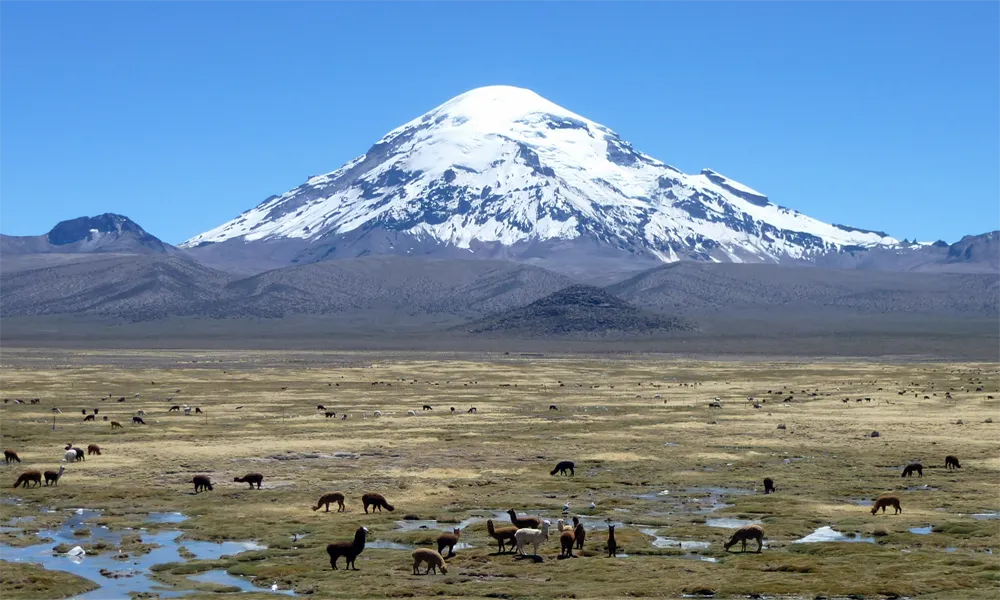
Sajama Mountain – The Sacred Guardian of the Bolivian Andes
Sajama Mountain is the highest mountain in Bolivia and one of the most imposing peaks in the Andes mountain range. Reaching an altitude of approximately 6,542 meters above sea level, this Andean colossus rises majestically in the western part of the country, within Sajama National Park, becoming a natural, spiritual, and cultural symbol of immense importance for the Bolivian highlands.
Beyond its height, Sajama Mountain represents a sacred space for Andean communities, a symbol of identity, and a prime destination for nature and adventure tourism.
📜 Origin and Cultural Significance
The name Sajama comes from Andean languages and is deeply connected to the ancestral worldview of the highlands. For the indigenous peoples, the snow-capped mountain is considered an Apu, a protective mountain with its own spirit, responsible for watching over the land, water, and the lives of the nearby communities.
Since pre-Hispanic times, Sajama has been venerated as a natural deity. Even today, many traditional ceremonies include offerings to Pachamama and the mountain, reaffirming the spiritual connection between nature and humankind.
🏔️ Geographic and Natural Characteristics
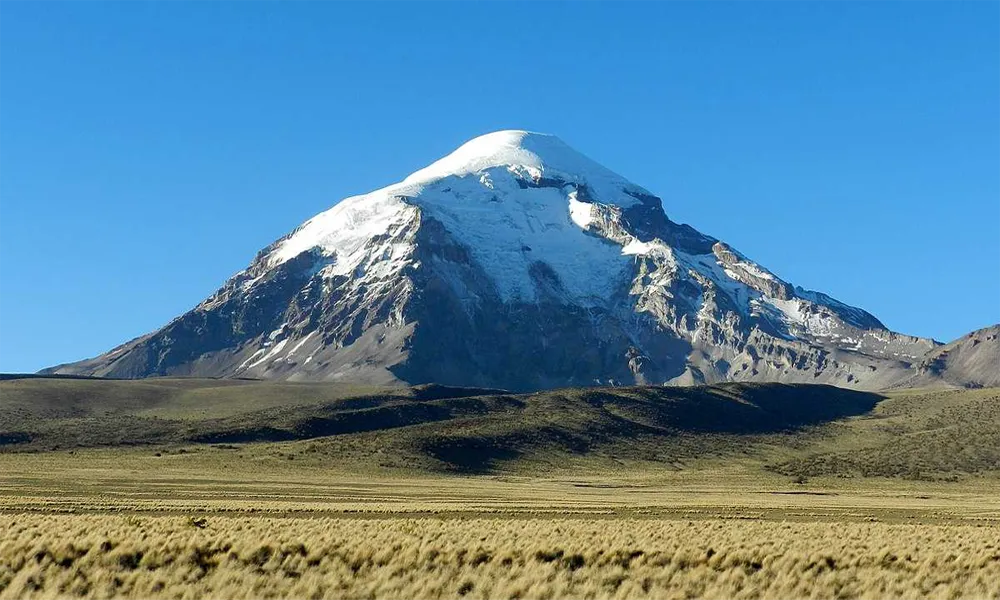
Sajama is an extinct volcano permanently covered in snow and ice, whose glaciers feed the wetlands and small lagoons of the Altiplano. Its presence regulates the local ecosystem, providing water and life in a region marked by extreme climatic conditions.
The area surrounding the mountain is dominated by vast plains, volcanic formations, geysers, and hot springs, creating one of the most breathtaking and least disturbed landscapes in Bolivia.
🌿 Biodiversity of the Environment
Although the climate is cold and dry, the Sajama region boasts surprising biodiversity. Among the fauna are vicuñas, llamas, alpacas, Andean foxes, and various highland birds. The vegetation is adapted to the altitude, most notably the famous queñua forests, considered the tallest in the world.
These ecosystems are essential for the environmental balance of the Altiplano and constitute a valuable protected natural heritage.
🥾 Tourism and Activities
Sajama Mountain is an iconic destination for mountaineering, especially for experienced climbers seeking to conquer Bolivia’s highest peak. In addition to the ascent, the area offers activities such as scenic hikes, wildlife observation, nature photography, and visits to natural hot springs.
Tourism in Sajama is characterized by its responsible and low-density nature, ideal for those seeking authentic experiences, tranquility, spiritual connection, and pristine landscapes.
🏛️ Historical and Environmental Importance
The creation of Sajama National Park transformed this region into a key protected area for the conservation of high Andean ecosystems. The snow-capped mountain is not only a geographical icon but also a fundamental element of the cultural identity of the department of Oruro and the country.
Its preservation is vital in the face of the effects of climate change, especially due to the progressive reduction of its glaciers, which represent a crucial water source for local communities.
📍 Location
Sajama Mountain is located in the Western Cordillera of the Bolivian Andes, within the province of Sajama (Oruro). It is part of an extinct volcanic system and is surrounded by unique landscapes such as geysers, hot springs, queñua forests, and high-altitude plains.
🌦 Climate
The climate on Sajama Mountain is cold and dry, typical of the Altiplano.
- Days: Sunny with temperatures between 10°C and 15°C.
- Nights: Very cold, reaching -10°C or lower.
The best time to visit is between May and September, when the sky is clear and rainfall is scarce.
💰 Prices and Access
- Entrance to Sajama National Park: Approximately 30 Bs (Bolivian tourists) and 100 Bs (foreigners).
- Mountain guide: Between 500 and 800 USD for the ascent, depending on the service.
- Accommodation: Community-run guesthouses from 10 USD per night, with more complete options at Eco Lodges.
- Local food: Typical dishes such as grilled llama or quinoa soup from 15 Bs.
🏨 Recommended Accommodation
Aymara community-run guesthouses with simple rooms.
Eco Lodges with views of the snow-capped mountain and integrated tourist services. Camping in designated areas, ideal for adventurous travelers.
🍲 Local Cuisine
In nearby communities, you can try:
- Quinoa soup
- Llama and alpaca meat
- Chuño (freeze-dried potatoes) with cheese
- Muña and coca infusions for acclimatization.
🚐 How to get there
- From La Paz: Land transport (4 to 5 hours) to the town of Sajama, passing through Patacamaya.
- From Oruro: Local buses (3 to 4 hours).
- From Chile: Access via Tambo Quemado, very close to the mountain.
✅ Travel Tips
- Bring high-altitude clothing: thermal jacket, gloves, hat, sunglasses, and sunscreen.
- Acclimatize beforehand in La Paz or Oruro to avoid altitude sickness.
- Hire certified local guides if you wish to climb.
- Bring cash in Bolivianos, as there are no ATMs in the area.
- Respect the rules of Sajama National Park and the local worldview.
✨ Symbolic Value of Nevado Sajama
Sajama is not just a mountain; it is a symbol of resilience, spirituality, and harmony with nature. For Bolivia, it represents the grandeur of the Andes and the living heritage of the indigenous peoples who have learned to coexist with an extreme environment, respecting and honoring it.