

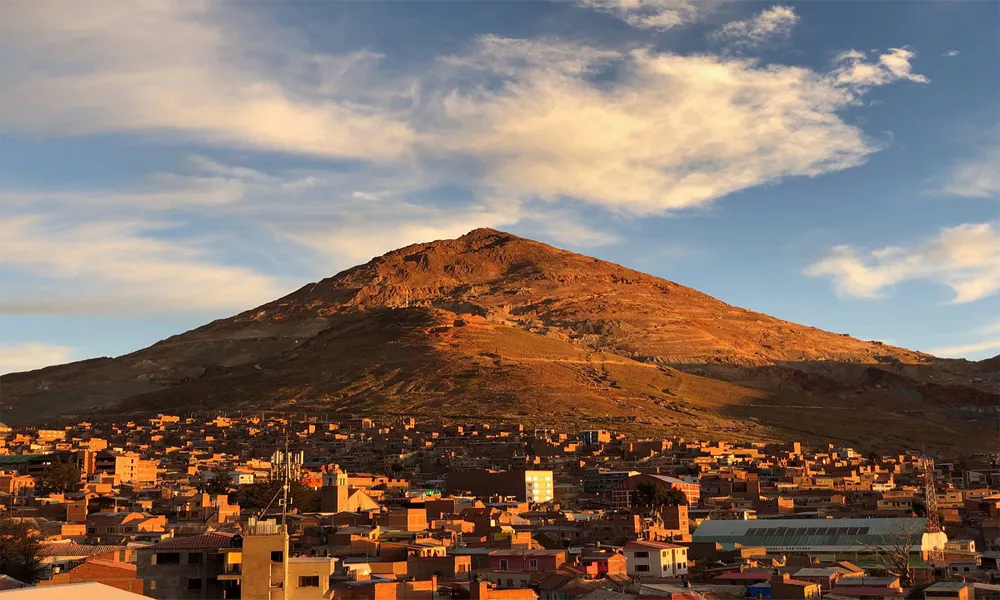
Cerro Rico of Potosí
Cerro Rico of Potosí is one of the most powerful historical symbols of Bolivia and Latin America. This legendary mountain shaped the destiny of the city of Potosí and had a decisive impact on the world economy during the colonial era, becoming one of the largest sources of silver on the planet.
Also known as Sumaj Orcko in Quechua, Cerro Rico is not just a geographical feature: it is an emblem of wealth, sacrifice, resilience, and historical memory.
📜 History of Cerro Rico
Cerro Rico was discovered in 1545, an event that completely transformed the Andean region. From that moment on, Potosí became one of the richest and most populated cities in the world, attracting thousands of people from different continents.
During the colonial period, the silver extracted from the mountain filled the coffers of the Spanish Empire and sustained a large part of the European economy. However, this wealth was obtained at the cost of the forced labor of thousands of Indigenous people and African slaves, subjected to harsh conditions inside the mines.
The mita system profoundly marked the social history of Cerro Rico, leaving a mark that still forms part of the Andean collective memory.
🏔️ Characteristics of Cerro Rico
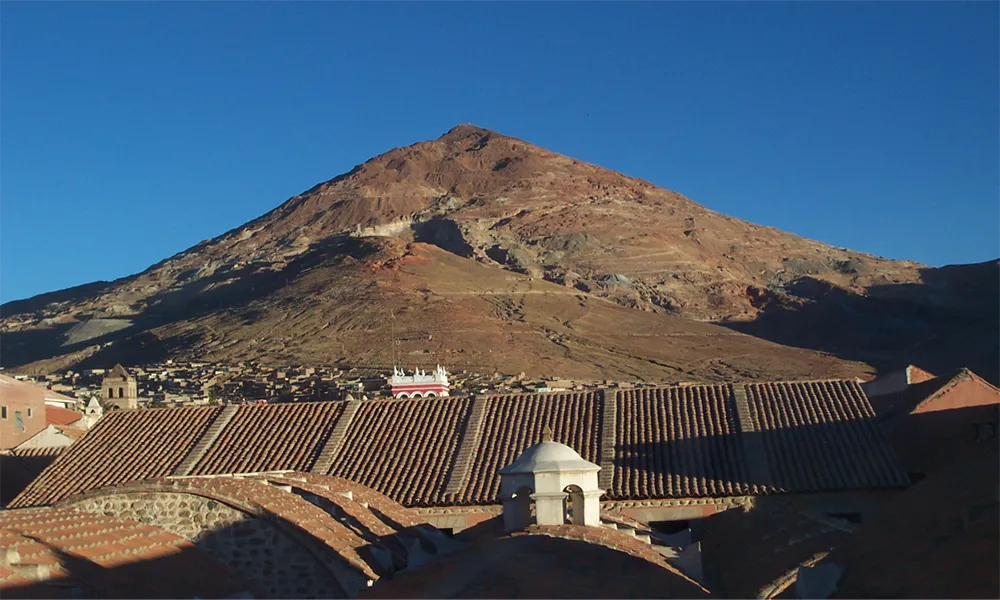
Cerro Rico rises to over 4,700 meters above sea level and dominates the Potosí landscape from any point in the city. Its conical silhouette is unmistakable and has been depicted in countless paintings, engravings, and historical documents.
Over the centuries, the mountain has been extensively riddled with thousands of mine entrances, tunnels, and galleries, demonstrating the scale of the mining activity that took place there.
⛏️ Mining and Life in the Mines
Mining at Cerro Rico continues to this day, primarily through mining cooperatives. Current extraction methods coexist with ancestral traditions, religious beliefs, and Andean rituals.
One of the most representative aspects is the figure of the Tío de la Mina (Uncle of the Mine), a protective and feared deity, to whom miners offer gifts to ask for safety and good fortune during their workday.
This subterranean world reflects a complex mix of faith, work, danger, and hope.
🌍 Cultural and Heritage Value
Cerro Rico is a fundamental part of the historical ensemble that led to the city of Potosí being declared a World Heritage Site. It is considered a living monument that allows us to understand the economic, social, and cultural processes that shaped Bolivia.
Beyond its mineral wealth, Cerro Rico represents a historical legacy that invites reflection on exploitation, inequality, and the resilience of Andean peoples.
📍 Location
Cerro Rico is located south of the city of Potosí, overlooking the valley and visible from almost anywhere in the city center.
✅ Recommendations for your visit
- Prepare for the altitude and walk at a leisurely pace.
- Wear warm and comfortable clothing, as the weather is cold and changeable.
- Respect local customs and traditions related to mining.
- Learn about the historical and social context beforehand for a more informed visit.
✨ The Historical Heart of Potosí
Visiting Cerro Rico in Potosí is to delve into one of the most intense chapters of American history. A mountain that brought wealth to the world, shaped the destiny of millions of people, and remains, to this day, the most profound symbol of Potosí’s identity.