
Eduardo Avaroa Nature Reserve – Complete Guide
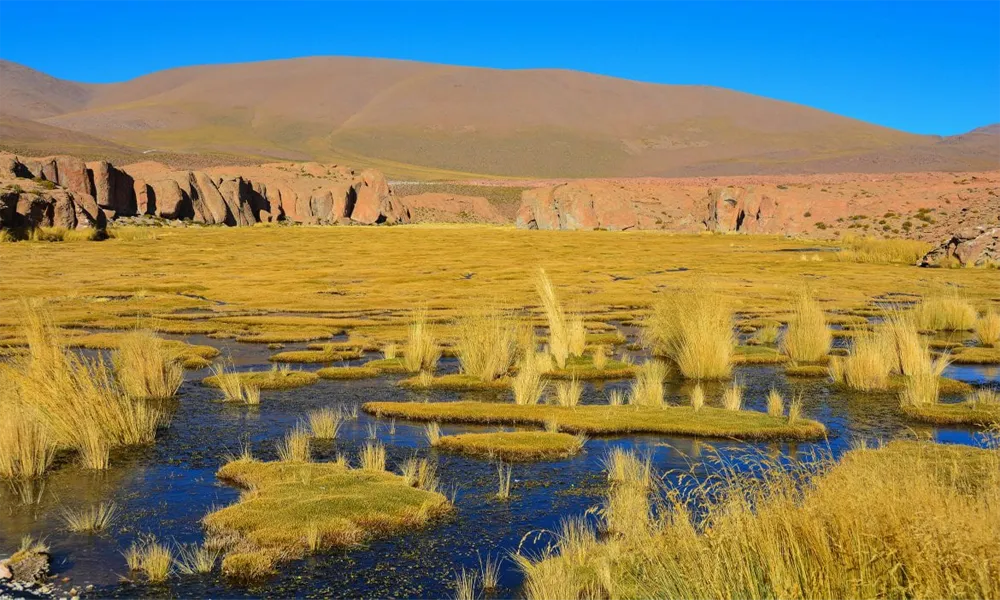
The Eduardo Avaroa Andean Fauna National Reserve (REA) is the most important protected area in the Bolivian highlands and one of the most visited places by travelers touring the Salar de Uyuni. This natural sanctuary, located in the department of Potosí, combines desert landscapes, volcanic mountains, colorful lagoons, and unique biodiversity, making it one of the most spectacular destinations in South America.
🌍 Location of the Eduardo Avaroa Reserve
The reserve is located in the far south of Bolivia, in the Sud Lípez province (Potosí), very close to the border with Chile and Argentina. Its altitude ranges from 4,200 to 5,400 meters above sea level, making it one of the most impressive high-altitude ecosystems on the planet.
It is generally visited on tours connecting Uyuni with San Pedro de Atacama (Chile), making it a key stop for travelers seeking to experience the most extreme Andean landscapes.
🏞️ Main Attractions of the Eduardo Avaroa Reserve
- Laguna Colorada
Considered the jewel of the reserve. Its reddish waters, tinged by algae and minerals, are home to thousands of Andean, Chilean, and James’s flamingos.
- Laguna Verde
Located at the foot of the Licancabur Volcano, its emerald color changes hue with the wind. A prime spot for photography.
- Sol de Mañana
A geothermal field at over 4,800 meters above sea level with active geysers, fumaroles, and boiling mud pools. The volcanic power of the Andes is on full display.
- Polques Hot Springs
Perfect for relaxing in a high-mountain natural setting with views of lagoons and volcanoes.
- Dalí Desert
A surreal landscape with rock formations that evoke the paintings of the artist Salvador Dalí.
- Stone Tree
A rock formation eroded by the wind that resembles a petrified tree in the middle of the desert.
- Andean Fauna
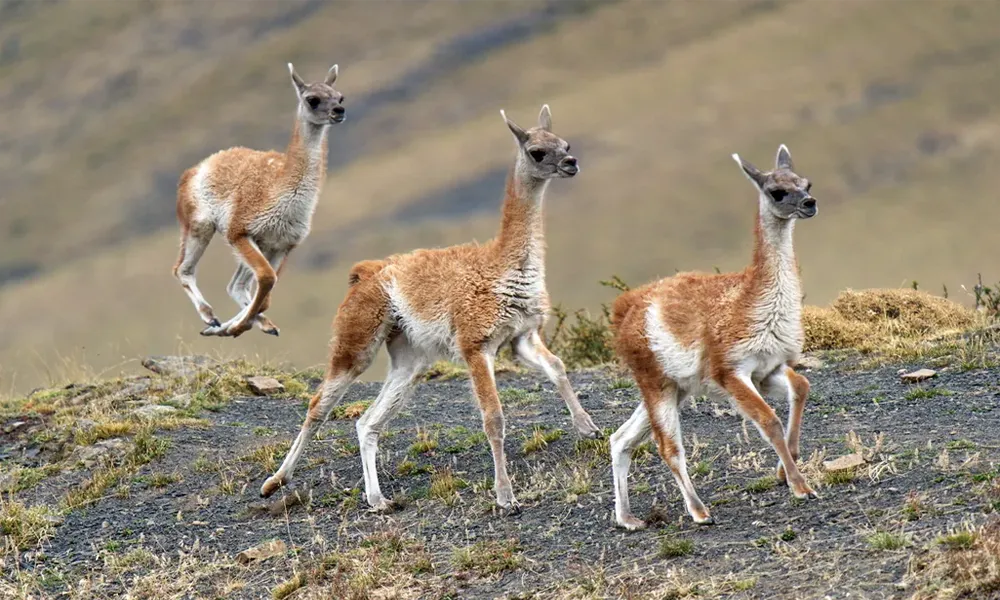
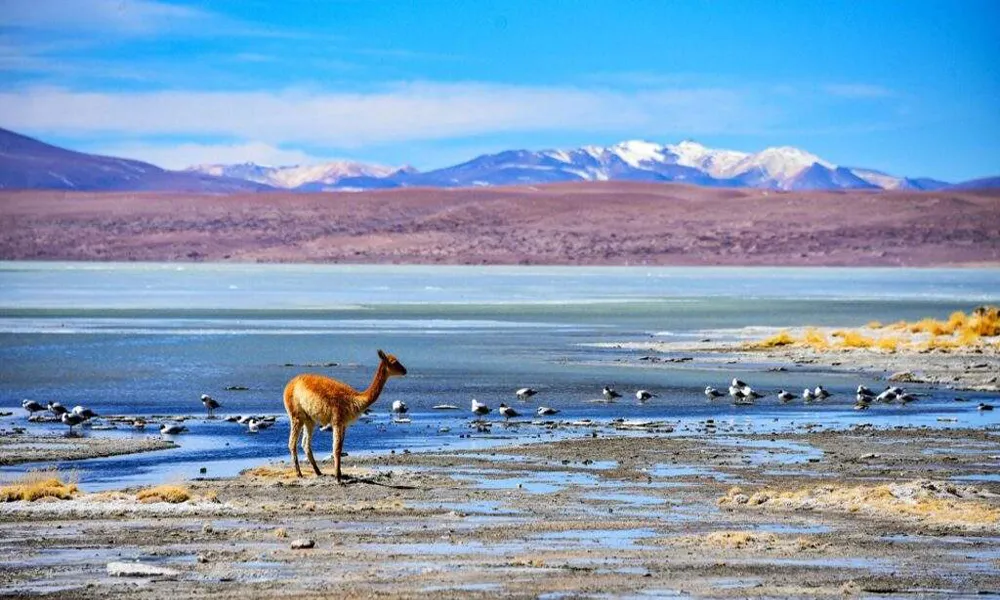
In addition to flamingos, unique species such as the vicuña, viscacha, Andean fox, and Andean rhea inhabit the area.
⛅Climate in the Eduardo Avaroa Reserve
The climate is cold and extreme, with temperatures that can drop to -15 °C at night, even during the dry season. Daytimes are usually sunny and windy, with temperatures ranging between 5 °C and 20 °C.
- Dry Season (May – October): Clear skies and landscapes perfect for photography.
- Rainy Season (November – March): Increased water levels in the lagoons and lakes of the Salar de Uyuni, although access can be difficult.
🚐 How to get to the Eduardo Avaroa Reserve
The most common way to visit the reserve is through organized tours:
- From Uyuni (Bolivia): 3 or 4-day tours that include the Salar de Uyuni and the reserve’s main attractions.
- From San Pedro de Atacama (Chile): 3-day excursions that cross the border and end in Uyuni.
- Private transportation: possible, but requires a 4×4 vehicle and special permits.
💰 Entrance Fee
The official entrance fee to the Eduardo Avaroa Reserve costs approximately 150 Bolivianos (US$22). This fee is paid in cash and is not usually included in tours.
🛌 Accommodation in the area
The reserve does not have conventional hotels, but rather rustic lodges managed by local communities. In Uyuni and San Pedro de Atacama, there is a wider variety of hotels, hostels, and tourist accommodations to suit all budgets.
✅ Recommendations for your visit
- Bring warm clothing for sub-zero temperatures.
- Use sunscreen and sunglasses; the radiation is very strong.
- Stay hydrated and chew coca leaves or drink coca tea to prevent altitude sickness.
- Bring cash (there are no ATMs in the reserve). Bring your camera with extra batteries (the cold drains them faster).
❓ Frequently Asked Questions about the Eduardo Avaroa Reserve
- What is the best time to visit the Reserve?
The dry season (May to October) offers clear skies and more accessible landscapes, although the cold is more intense.
- How long does a typical tour last?
The most common tours are 3 days / 2 nights or 4 days / 3 nights, combining Salar de Uyuni and the Eduardo Avaroa Reserve.
- Can I visit independently?
Yes, but it is not recommended without experience driving in the highlands. Ideally, you should go on an organized tour for safety and comfort.
- What animals can I see?
Mainly flamingos, vicuñas, vizcachas, Andean foxes, and highland birds.