
General Cemetery of Sucre
The General Cemetery of Sucre is one of the city’s most unique and symbolically rich spaces. Beyond its funerary function, this cemetery constitutes a veritable open-air historical archive, where art, memory, architecture, and tradition intertwine. A visit here is to delve into the social, political, and cultural history of Sucre, reflected in its mausoleums, sculptures, and centuries-old tombstones.
📍 Location and How to Get There
The General Cemetery is located in Sucre, Bolivia, just a 10-minute drive from Plaza 25 de Mayo, in the city’s historic center.
Getting there:
- 🚶 On foot: Ideal if you are in the city center; the walk takes approximately 20 minutes.
- 🚕 Taxi or private transport: The fastest and most comfortable option.
- 🚌 Public transport: Several minibus lines connect the city center with the cemetery.
Address: Calle Loa s/n, Central Zone, Sucre, Bolivia
🕒 Hours and Admission
Visiting Hours:
- Monday to Sunday: 8:00 a.m. to 6:00 p.m.
Admission Fee:
- Bolivian Nationals: Bs. 5
- Foreigners: Bs. 10
Best time to visit: In the morning, when there are fewer visitors and better light for photographs.
🕯️ Origin and History of the Sucre General Cemetery
The Sucre General Cemetery was established in the 19th century, a time when cities began to relocate burial grounds outside the city center for sanitary and urban planning reasons. Since then, it has become the main final resting place for prominent figures, traditional families, and ordinary citizens who were part of the daily life of Bolivia’s historic capital.
Over the years, the cemetery grew and adapted, preserving a structure that reflects different historical stages and artistic styles, from the republican period to more contemporary expressions.
🏛️ Funerary Architecture and Marble Art
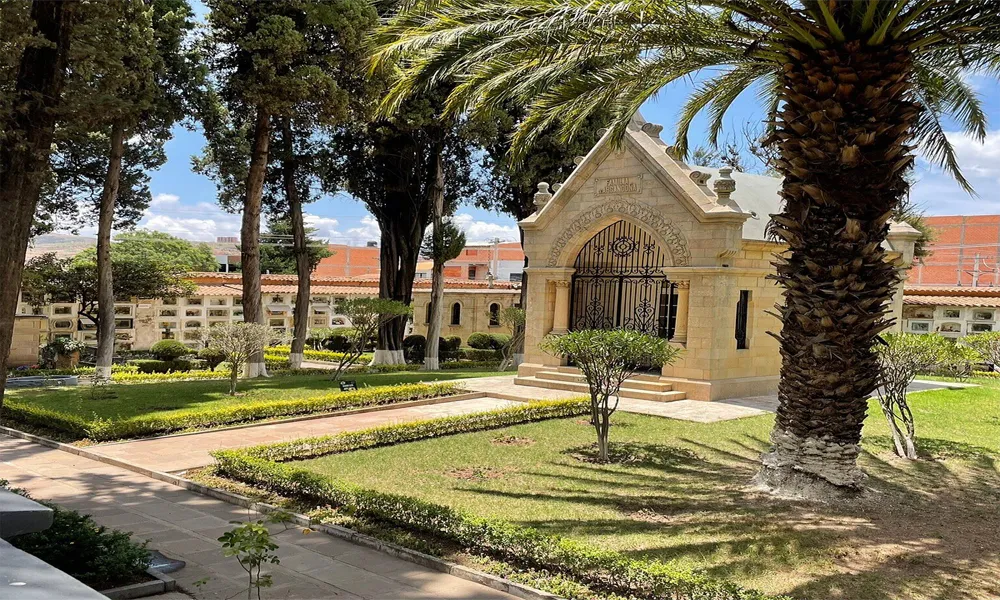
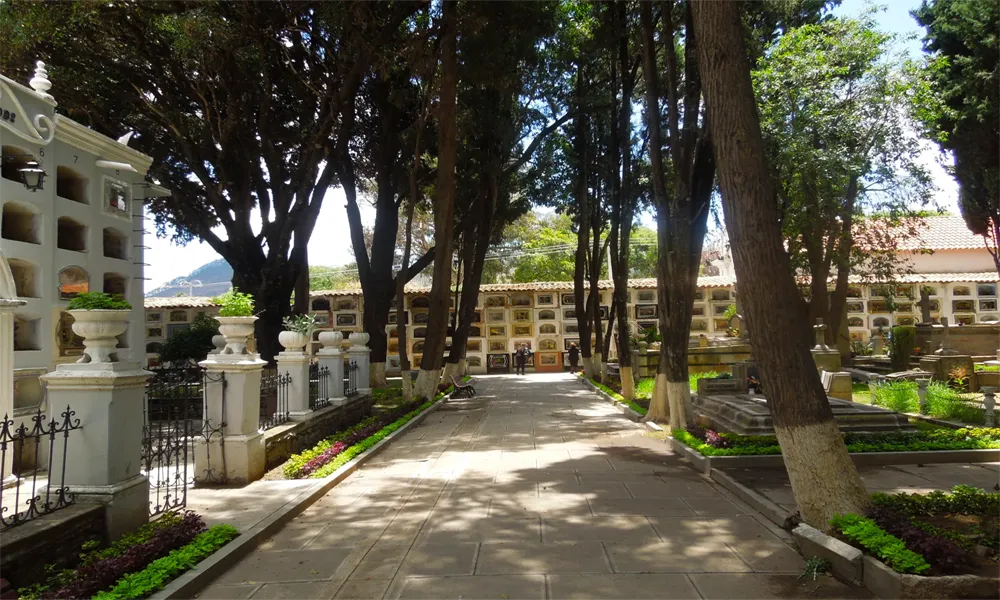
One of the most striking aspects of the Sucre General Cemetery is its architectural richness. Its walkways house a wide variety of family mausoleums, niches, and pantheons that stand out for their design and ornamentation.
Among the most representative elements are:
- Neoclassical-style mausoleums, with columns, pediments, and symmetrical details.
- Sculptures of angels, crosses, and religious figures, carved in marble or stone.
- Decorated niches that reflect family customs and spiritual beliefs.
Each structure tells a story and reveals how different generations understood death, faith, and memory.
🕊️ A Space of Memory and Tradition
The General Cemetery is not only a place of rest, but also a living space of tradition. During special occasions like All Saints’ Day and All Souls’ Day, the cemetery fills with flowers, candles, and offerings, reflecting the deeply rooted cultural and spiritual practices of Sucre society.
These celebrations transform the cemetery into a meeting point between generations, where the memory of loved ones is kept alive through rituals, music, and prayer.
🌿 Atmosphere and Tour
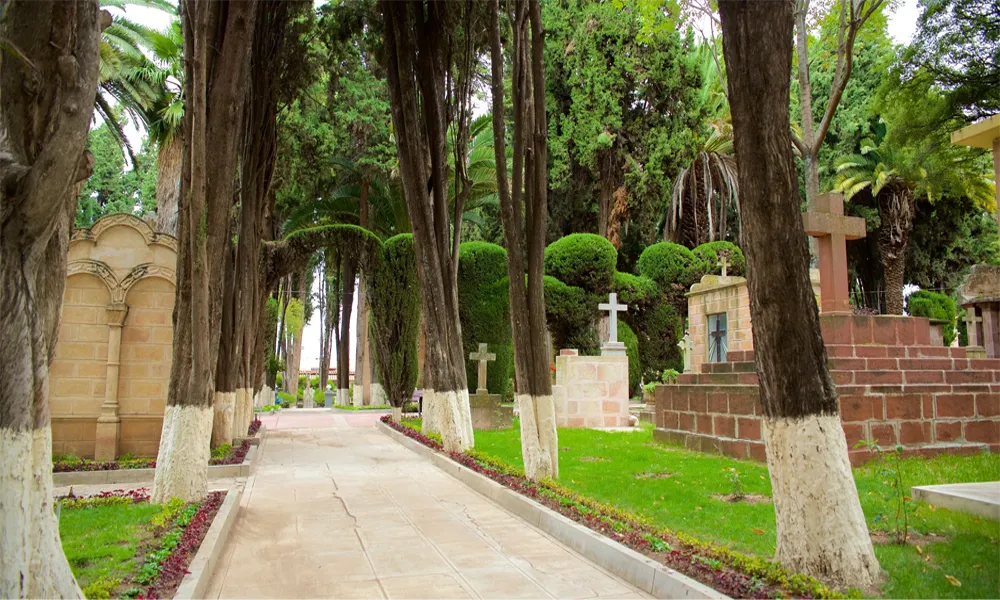
Despite its solemn nature, the Sucre General Cemetery offers a tranquil and orderly environment. Its tree-lined paths, spacious courtyards, and quiet areas invite a leisurely and respectful stroll. It is an ideal place for those who enjoy cultural tourism, heritage photography, or personal reflection.
Walking through its corridors allows you to observe how the passage of time has left visible marks on each tombstone, creating a unique atmosphere, rich in history and symbolism.
✅ Recommendations for Your Visit
- Bring sunscreen and a hat, especially if you visit during the warmer months.
- Wear comfortable shoes, as you will be doing a lot of walking inside the cemetery.
- Respect the rules of the site and avoid touching the sculptures or mausoleums.
- If you would like professional photographs, please consult with the administration beforehand.
- Consider taking a guided tour to make the most of your visit.
❓ Frequently Asked Questions
- Is it possible to visit the Sucre General Cemetery?
Yes, the cemetery is open to the public and can be explored freely and respectfully.
- Is it a tourist attraction?
Yes. Due to its historical, artistic, and cultural value, it is considered a point of interest for visitors interested in the history and heritage of Sucre.
- What can be seen during the visit?
Historical mausoleums, funerary sculptures, Republican architecture, and cultural expressions related to memory and faith.
- Is it recommended to visit with a guide?
Although not mandatory, a guided tour can enrich the experience by providing historical and cultural context.
✨ A reflection of Sucre’s history
The General Cemetery of Sucre is much more than a burial ground: it is a place where the city preserves its most intimate memories. Its monuments, traditions, and silences tell stories of life, faith, and legacy. Visiting it allows you to understand Sucre from a profound and human perspective, where the past remains present in every corner.