
Government Palace (Burnt Palace), Bolivia
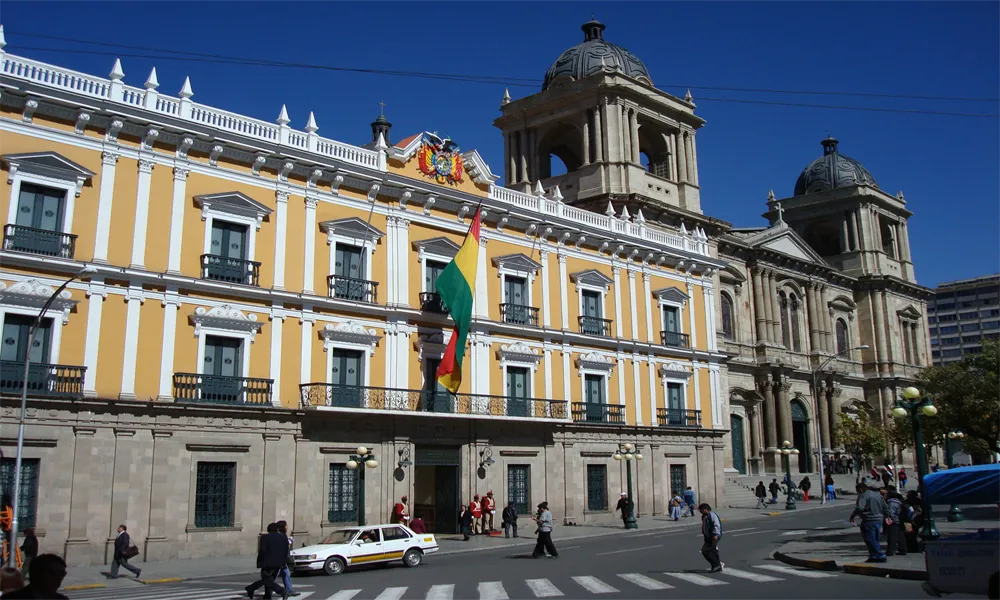
The Government Palace, also known as the Burnt Palace, is one of the most emblematic and significant buildings in La Paz, Bolivia. This majestic building, dating back to the colonial era, has witnessed key historical events and remains a symbol of Bolivian political life.
📜 History of the Burnt Palace
The Burnt Palace was built in the 18th century, during the colonial period, and has served as the seat of government since Bolivia’s independence in 1825. Its name, “Burnt Palace,” comes from a fire that destroyed much of the building in 1875, although it was quickly rebuilt.
Over the years, this building has been the site of important political events, from presidential inaugurations to protests and uprisings. It has been the seat of executive power and continues to be a central location for the country’s political decisions.
🏰 Architecture of the Burnt Palace
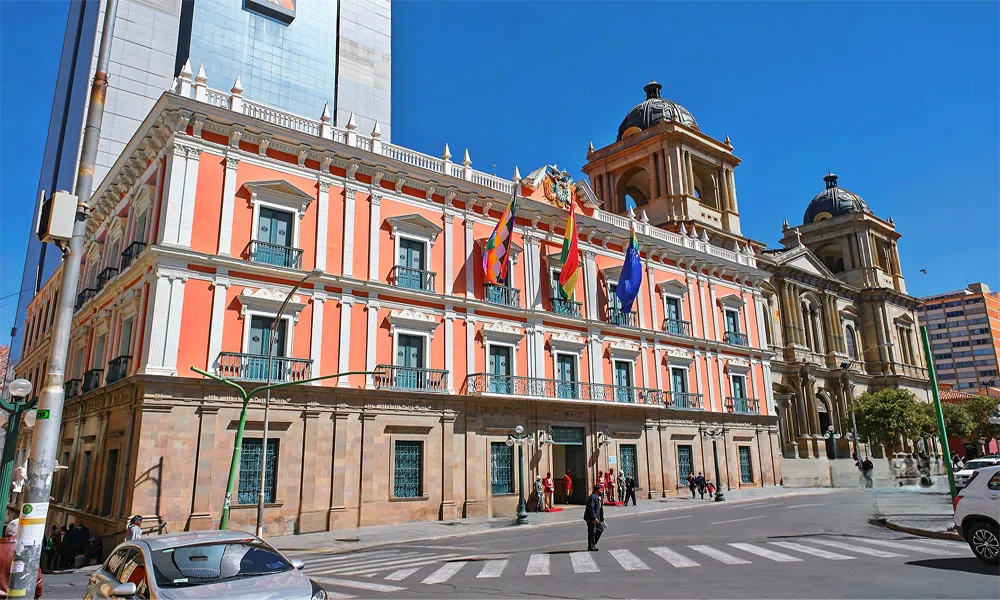
The Burnt Palace is a prime example of Bolivian colonial architecture, with Neoclassical and Baroque influences that make it a visual testament to Bolivia’s historical past. The warm-colored façade is adorned with columns, wooden details, and balconies that lend it an imposing and majestic air.
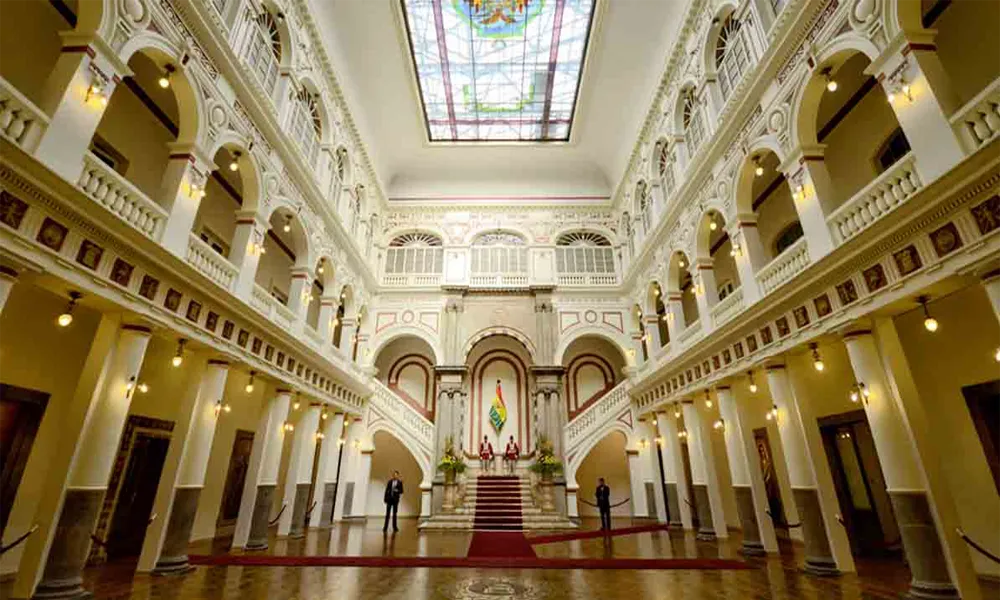
Inside, the building features several halls and corridors, some of which are decorated with elements from the colonial and republican eras, such as antique furniture and works of art that reflect the country’s rich cultural heritage.
🌟 Attractions of the Burnt Palace
The Burnt Palace is not only an important political center but also a tourist attraction. Some of the main attractions include:
- Murillo Square: In front of the Burnt Palace is Murillo Square, a place where civic events are held and where visitors can enjoy the surrounding gardens and historic buildings, such as the Metropolitan Cathedral and the National Congress.
- The Hall of Presidents: One of the most important areas of the Palacio Quemado (Burnt Palace), where portraits of Bolivian presidents throughout history can be seen.
- The Central Courtyard: This beautiful courtyard surrounded by columns is one of the most impressive features of the building, offering a unique view of the architecture and history of the site.
Historical Moments Etched in Its Walls
In 1946, a violent uprising culminated in the assassination of President Gualberto Villarroel, who was thrown from a palace balcony and then hanged from a lamppost in the plaza.
- Conservation and Heritage Value
In 2019, UNESCO awarded the Palacio Quemado the Blue Shield, recognizing its cultural value and the need for its preservation.
🎤 Activities at the Palacio Quemado (Burnt Palace)
The Palacio Quemado is not regularly open to the public, as it is a government office used for official meetings and ceremonies. However, guided tours can be arranged for groups, giving visitors the opportunity to learn about the history of the building, its architecture, and its role in Bolivian politics.
Additionally, on special occasions, such as Independence Day or national holidays, public events and celebrations are held in front of the Palace.
💡 Practical Tips
- Best time to visit: The Palacio Quemado can be visited year-round, but the best times are during national holidays and civic events, when the building is bustling with activity.
- Access 🚶♂️: The Palacio Quemado (Burnt Palace) is located in the center of La Paz, so it can be easily reached on foot or by public transport from other points of interest, such as Plaza Murillo and the Church of San Francisco.
- Security 🔒: As it is a government building, it is recommended to be aware of security regulations and respect the rules of the site. Access may be restricted at certain times due to official events.
❓ Frequently Asked Questions
- Can I visit the Palacio Quemado?
Yes, guided tours are available under certain conditions, but access is sometimes restricted due to official events.
- Do I need to buy tickets?
Generally, visits to the Palacio Quemado are free, although in some cases, such as for special events or guided tours, advance registration may be required.
- Is it near other tourist attractions?
Yes, the Palacio Quemado is located in Plaza Murillo, one of the main tourist centers of La Paz. Other nearby landmarks include the Metropolitan Cathedral and the National Congress.
The Burnt Palace (Palacio Quemado) is a must-see for anyone visiting La Paz, Bolivia. With its rich history, impressive architecture, and central role in the country’s political life, it is a symbol of Bolivian identity. Although visits are limited, this monument remains a living testament to Bolivia’s history and culture, and an important stop for understanding the country’s political evolution. If you have the opportunity, don’t miss it and immerse yourself in its fascinating history.