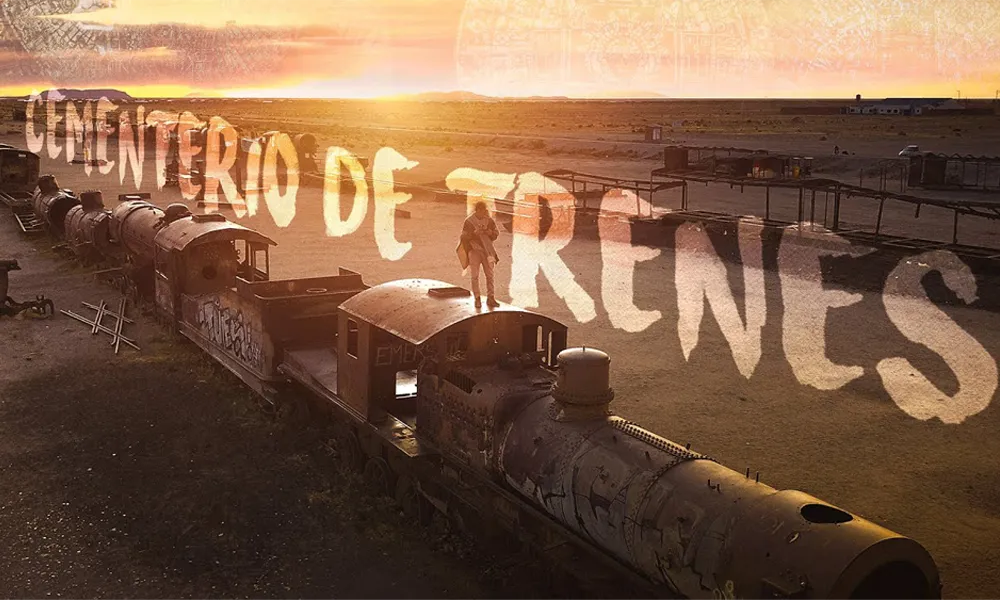

Train Cemetery in Uyuni: History, Location and Tips for Your Visit
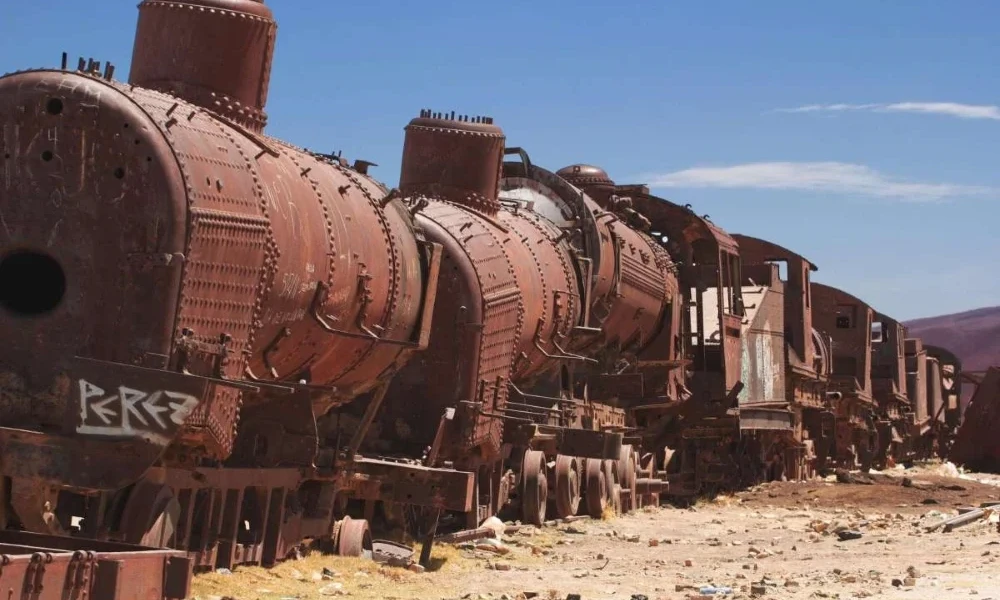
The Uyuni Train Cemetery is one of Bolivia’s most symbolic and evocative places. At first glance, it resembles an open-air museum of rusted iron; however, behind each abandoned locomotive lies a story of economic boom, industrial dreams, and railway decline on the Andean plateau.
Visiting this place is not just a photo stop before reaching the Salar de Uyuni, but a journey into Bolivia’s railway past, where the silence of the desert contrasts sharply with the roar of these trains once transporting mineral wealth.
📍 Exact Location of the Uyuni Train Cemetery
The Train Cemetery is located 3 kilometers southwest of the city of Uyuni, in the department of Potosí, at an approximate altitude of 3,670 meters above sea level.
- Distance from Uyuni: 10 minutes by car
- Recommended visit time: 30 to 45 minutes
- Entrance fee: Free
- Access type: Open, no set hours
Due to its strategic location, it is the traditional first stop on tours to the Salar de Uyuni.
🕰️History of the Train Cemetery
🚂 Uyuni as a railway hub of Bolivia
At the end of the 19th century, Uyuni became one of the country’s main railway centers. Its location allowed it to connect the mines of Potosí and Oruro with Pacific ports, especially those in Chile.
During this period, Bolivia imported steam locomotives manufactured in England, Germany, and the United States, considered cutting-edge technology at the time.
📉 The Collapse of the Railway System
Over time, several factors led to the abandonment of the railway system:
- Decline of traditional mining
- Economic and political conflicts
- Lack of investment in maintenance
- Changes in trade routes
The locomotives became unusable and were abandoned to the elements, forming what is now known as the Train Cemetery.
🚆 What locomotives will you see at the Train Cemetery?
During the tour, you will see:
- 19th-century steam locomotives
- Mining freight cars
- Abandoned passenger trains
- Boilers, wheels, chimneys, and rusted axles
- Remains of original railway infrastructure
Many of these structures are over 100 years old, making them true industrial relics.
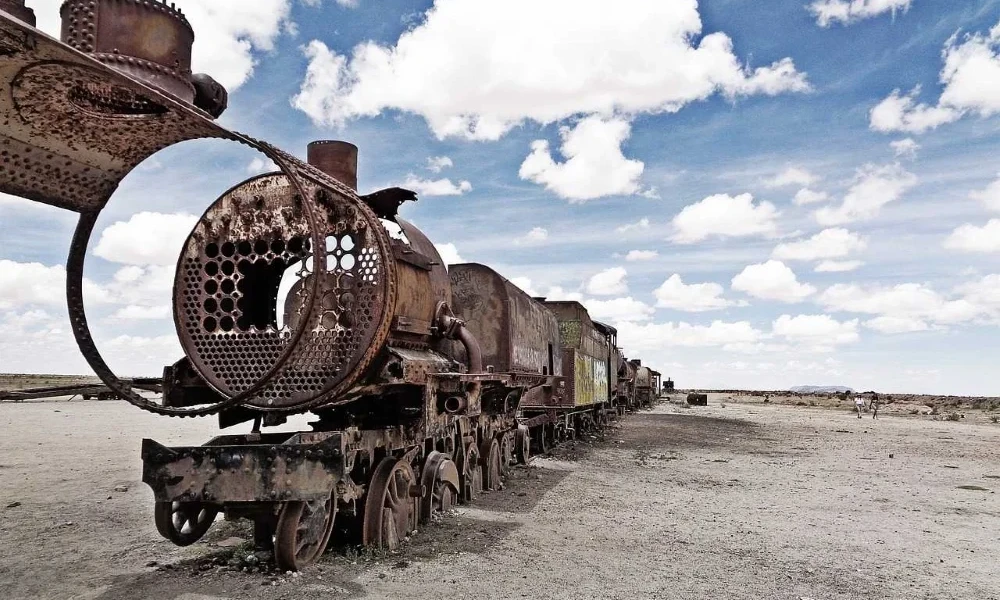
📸Train Cemetery: One of the most photographed places in Bolivia
The Train Cemetery is world-renowned for its unique aesthetic. It’s an ideal setting for:
- Artistic and conceptual photography
- Travel photography
- Alternative fashion shoots
- Perspective photography
- Social media content
The contrast between the rusted metal, the intense blue sky, and the vastness of the Altiplano creates powerful and memorable images.
🗓️ Best time to visit the Train Cemetery
Dry season (April – November)
- Clear skies
- Best visibility
- Cool but stable weather
- Ideal for photography
Rainy season (December – March)
- More dramatic landscapes
- Intense clouds
- Uneven ground
- Fewer tourists
🎒 Practical tips for your visit
- Bring warm clothing (the wind is constant)
- Use sunscreen and UV sunglasses
- Bring water, even for short visits
- Be careful when boarding the trains (sharp, rusty metal)
- Wear sturdy shoes
- Do not remove pieces or scratch the structures
- Respect the site as a historical landmark
⚠️ Safety and conservation
Although access is free, many structures are deteriorated. Avoid climbing to high or unstable areas. The conservation of the site also depends on responsible tourism.
❓ Frequently Asked Questions about the Train Cemetery
- Is it necessary to book a tour?
No, you can visit on your own, but a tour facilitates transportation.
- Is it suitable for children?
Yes, always under adult supervision.
- How much time should I spend there?
Between 30 and 45 minutes is enough.
- Are there services on site?
No. There are no restrooms, shops, or restaurants.
🌍 Tourist and Cultural Significance
The Train Cemetery is not only a visual attraction but also a symbol of Bolivia’s industrial past. It represents an era of economic hope and development, now transformed into a tourist and cultural heritage site.