
Licancabur Volcano in Uyuni – Tourist Guide
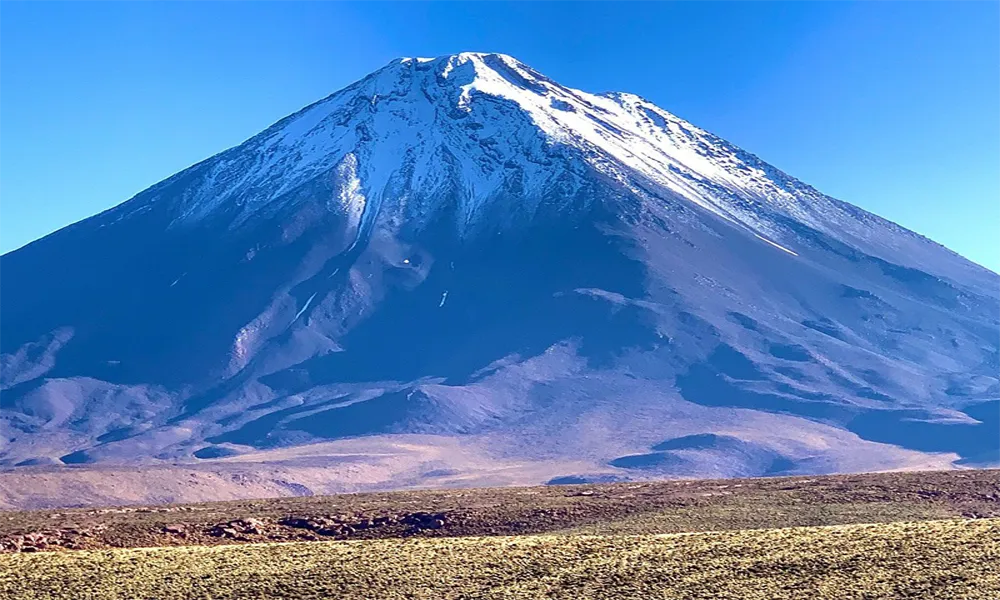
Licancabur Volcano is one of the most imposing and symbolic volcanoes of the Andean highlands. With an almost perfect silhouette and an approximate altitude of 5,916 meters above sea level, it dominates the landscape south of the Salar de Uyuni and rises majestically along the border between Bolivia and Chile 🇧🇴🇨🇱.
Visible from various points within the Eduardo Avaroa Andean Fauna National Reserve, Licancabur stands out not only for its height but also for its spiritual, archaeological, and scenic value, being considered a sacred volcano within the Andean worldview ✨.
📍Location of Licancabur Volcano
The volcano is located south of the Salar de Uyuni, in the department of Potosí, very close to Laguna Verde and Laguna Blanca. It is part of the southern circuit covered by tours from Uyuni and is also visible from San Pedro de Atacama.
👉 Access is exclusively by 4×4 vehicles, as part of organized tours. It is not a point that can be reached independently.
🗺️ Cultural and Spiritual Significance
For pre-Hispanic cultures, Licancabur was an Apu, that is, a sacred mountain protecting the Andean peoples. Inca archaeological remains have been found on its summit, confirming that it was an important high-altitude ceremonial center.
In the volcano’s crater lies a glacial lake, considered one of the highest in the world, which reinforces its mystical and sacred character.
🏞️ Landscape surrounding Licancabur
The volcano’s surroundings are simply spectacular:
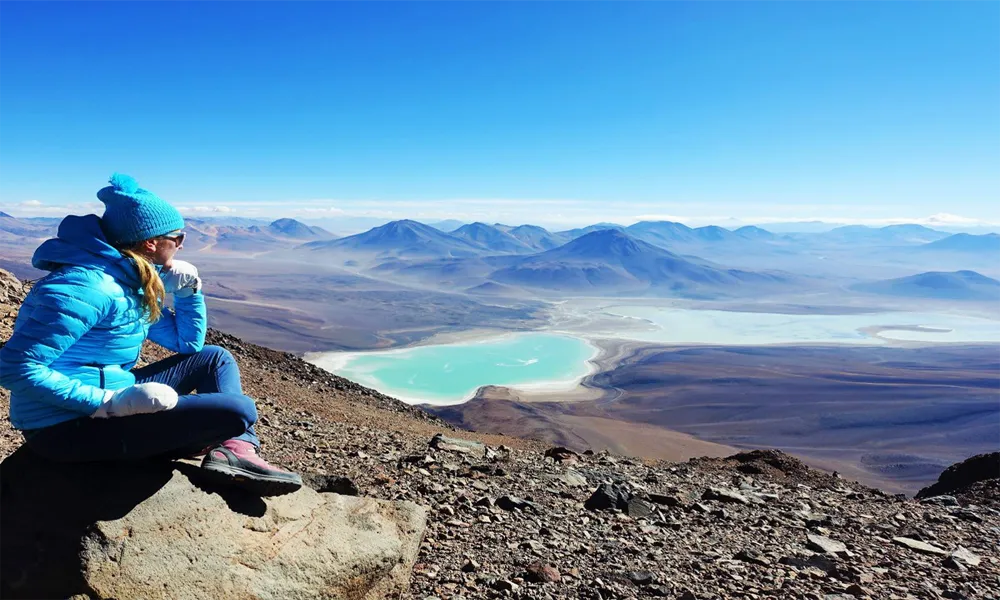
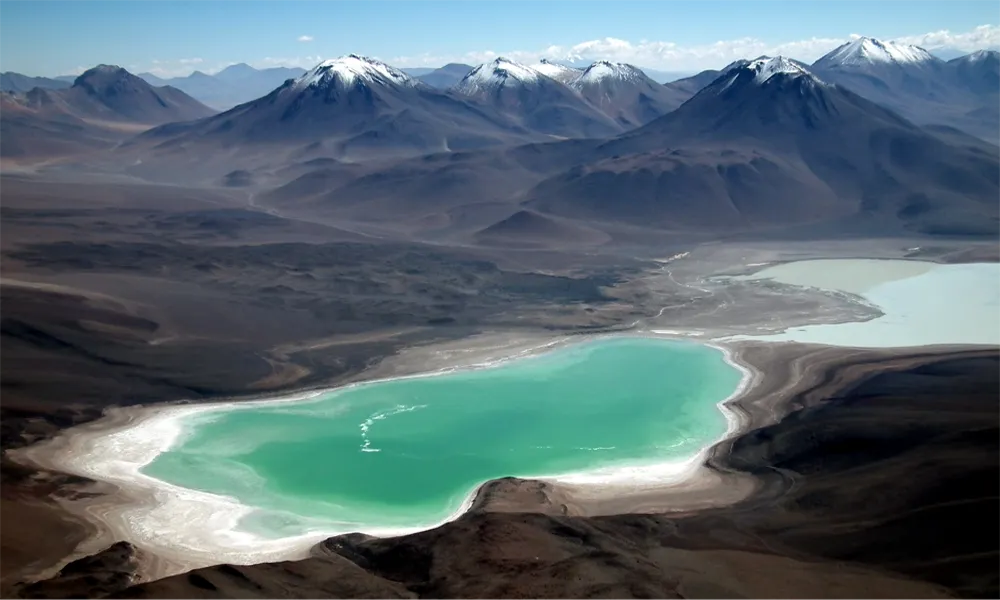
- 💚 Laguna Verde, with its intense emerald color due to its high mineral content
- 🤍 Laguna Blanca, with its milky tones and tranquil appearance
- 🌋 Volcanic fields, fumaroles, and mineralized soils
- 🏔️ Vast plains of the Altiplano with endless skies
On clear days, the volcano is perfectly reflected in Laguna Verde, creating one of Uyuni’s most iconic views.
🌦️ Climate and best time to visit
- Dry season (April to November): Clear skies and better visibility
- Rainy season (January to March): More intense colors, but variable access
🌡️ Temperatures can drop to -15 °C, especially at dawn.
🧭 Is it possible to climb Licancabur Volcano?
Yes, but not from Uyuni as a regular tourist activity. The ascent is mainly done from Chile (San Pedro de Atacama) and is recommended only for experienced mountaineers due to the extreme altitude and severe weather conditions.
For travelers visiting Uyuni, the main attraction is to admire and photograph it, not to climb it.
✅ Recommendations for visiting Licancabur Volcano
- 🧊 Acclimatize properly before the tour
- 🧥 Wear thermal clothing, a windbreaker, and gloves
- 🕶️ Use UV sunglasses and sunscreen
- 📸 Take advantage of the early morning hours for photos
- 🚫 Do not attempt to approach the volcano without a guide or leave the designated route
❓ Frequently Asked Questions
1. Is it possible to climb Licancabur Volcano without a guide?
It is not recommended. The altitude and extreme conditions require experience and professional guides.
2. What is the main attraction near Licancabur?
Laguna Verde, famous for its intense emerald color, is one of the most photographed natural gems.
3. How tall is Licancabur Volcano?
Its summit reaches 5,920 meters above sea level, making it one of the tallest and most iconic volcanoes in the region.
4. How do I get to Licancabur from Uyuni?
It can be reached on 3- to 4-day tours that cross the Salar de Uyuni, the Dalí Desert, and the Eduardo Avaroa National Reserve, before arriving at Laguna Verde and Laguna Blanca.