
Museum of Indigenous Art
The Museum of Indigenous Art in Sucre is one of the city’s most valuable and authentic cultural spaces. Dedicated to the preservation, research, and dissemination of Andean textile art, this museum allows visitors to understand the profound connection between identity, worldview, and tradition of the indigenous peoples of Chuquisaca. More than just an exhibition hall, it is a place where weaving reveals itself as a language, memory, and living expression of Andean culture.
📌Practical Information for Visitors
- It is located in Sucre, Bolivia, specifically at Pasaje Iturricha 314, inside the Hotel Kolping.
- Hours: Monday to Saturday — mornings and afternoons; closed Sundays
- Admission Fees:
-Bolivian Citizens: BOB 15
-Foreigners: BOB 30
A visit to the ASUR Museum is more than just seeing art; It is about listening to the threads woven with history, feeling the heartbeat of Andean tradition, and supporting the continuity of a living legacy.
🧶 History and Origin of the Museum of Indigenous Art
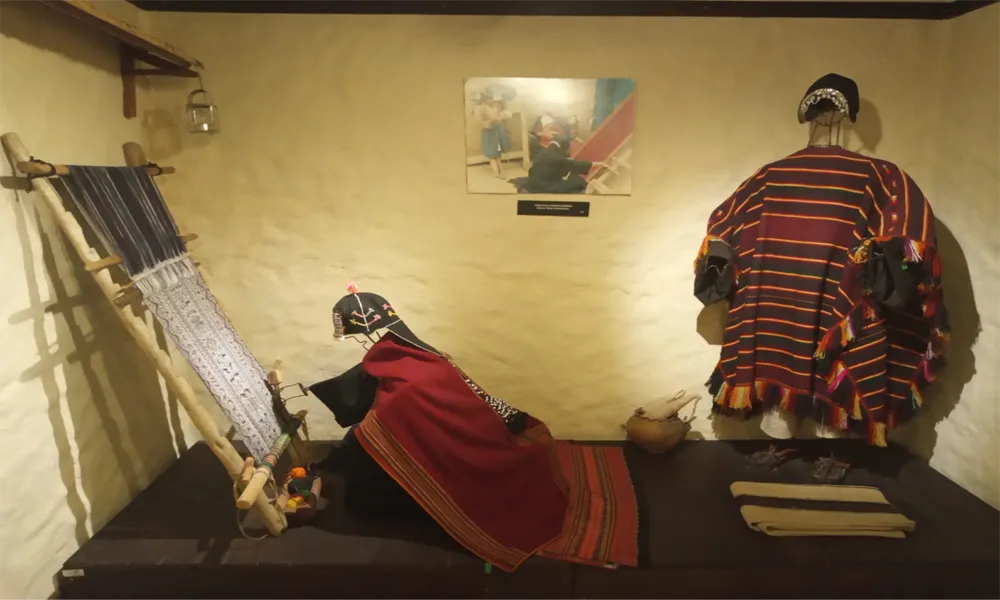
The museum was created as part of the work of the Association of Indigenous Weavers, with the goal of rescuing ancestral techniques that were at risk of disappearing. From its inception, the project focused on revaluing textile knowledge passed down from generation to generation, especially in rural communities near Sucre.
Over time, the museum has established itself as a national and international benchmark in the study of indigenous art, becoming a key space for researchers, students, and travelers interested in Bolivia’s cultural heritage.
🧵 Textiles That Tell Stories
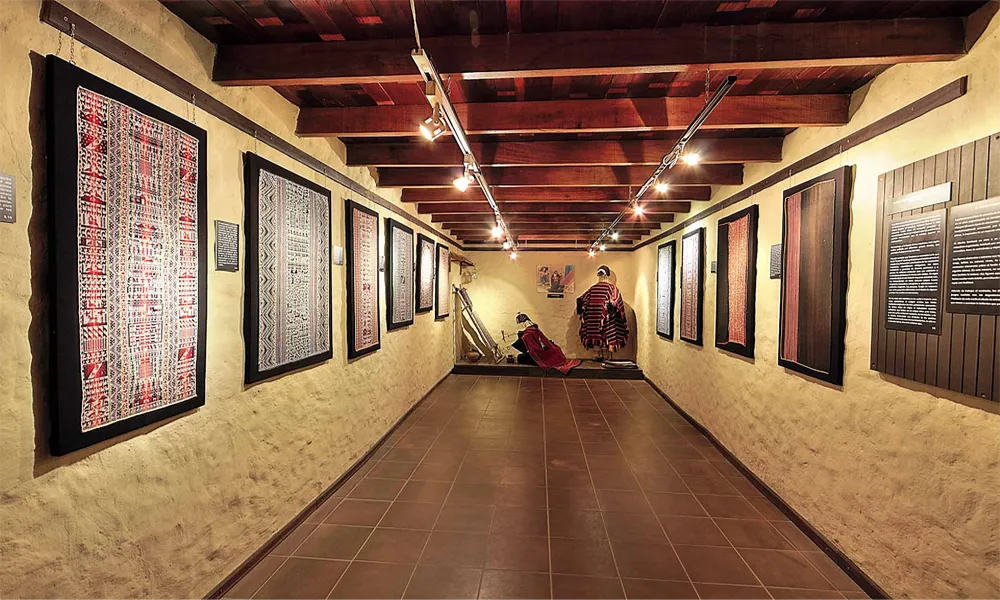
The main attraction of the Museum of Indigenous Art is its extraordinary collection of traditional textiles, handcrafted using pre-Hispanic techniques. Each piece is unique and imbued with symbolism.
Among the most representative textiles are:
- Jalq’a textiles, known for their complex, chaotic designs that represent the inner world, dreams, and mythical beings.
- Tarabuco textiles, characterized by geometric patterns and scenes of daily life, rituals, and historical battles.
- Ceremonial garments, blankets, sashes, and clothing that reflect social status, agricultural cycles, and spiritual beliefs.
The colors, shapes, and figures are not random decorative elements: each thread communicates a story, a vision of the universe, and a profound connection with nature.
🧠 Andean Cosmovision and Symbolism
One of the most fascinating aspects of the museum is the way it explains the Andean cosmovision through textile art. Many of the exhibited pieces feature representations of the visible and spiritual worlds, mythical animals, sacred mountains, and scenes that don’t follow a Western logic, but rather a symbolic narrative unique to the Andes.
The museum invites visitors to observe carefully and understand that, for Indigenous communities, weaving is a way of writing history without words.
🏛️ Spaces and Visitor Experience
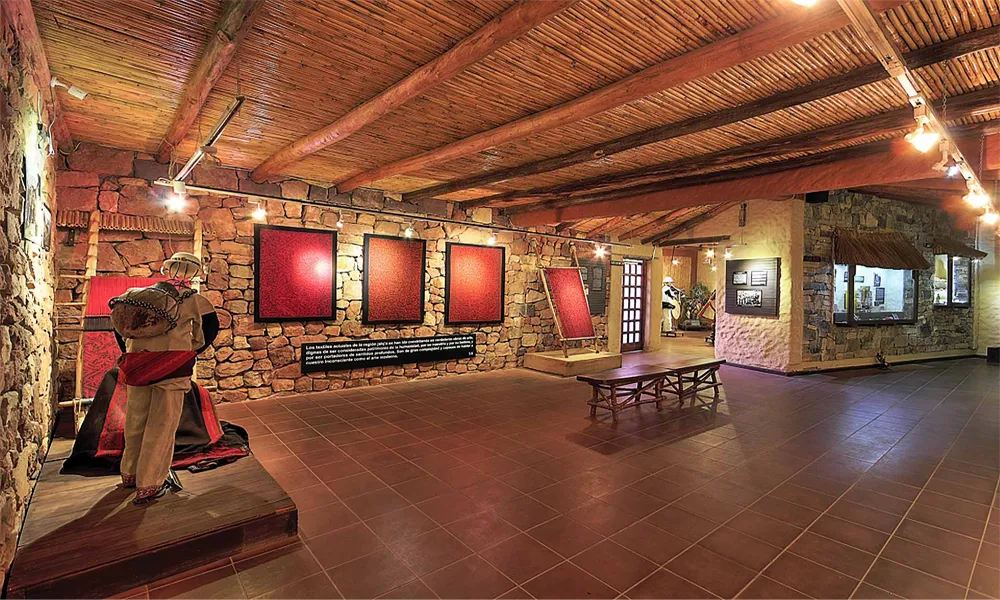
A visit to the Museum of Indigenous Art is peaceful, educational, and profoundly enriching. The galleries are clearly organized, allowing visitors to appreciate the textiles up close and understand their cultural context. Furthermore, the ambiance maintains an intimate atmosphere that fosters contemplation and respect for the exhibited pieces.
The visit is ideal both for those seeking a profound cultural experience and for those who wish to discover a less visible, yet essential, facet of Sucre and its region.
❓ Frequently Asked Questions
- What type of art is exhibited in the museum?
Primarily Indigenous textile art, with an emphasis on traditional weavings made using ancestral techniques.
- Is this a recommended museum for learning about Andean culture?
Yes. It’s one of the best places to understand the worldview, history, and identity of the indigenous peoples of Chuquisaca.
- Is the visit suitable for everyone?
Absolutely. The museum is accessible and offers an educational experience for both adults and young people interested in the culture.
- How much time is recommended for the visit?
Approximately 45 minutes to an hour, depending on your interest and the level of detail you observe in the pieces.
✨ A Living Legacy in Threads and Colors
The Indigenous Art Museum of Sucre is a must-see for those who want to go beyond colonial architecture and discover the deep soul of the Andes. Each textile on display is a work of art imbued with memory, resilience, and ancestral wisdom. Walking through its galleries is to connect with a living legacy that continues to weave identity, history, and culture in the heart of Bolivia.