
Pedro Domingo Murillo Square: Historic Heart
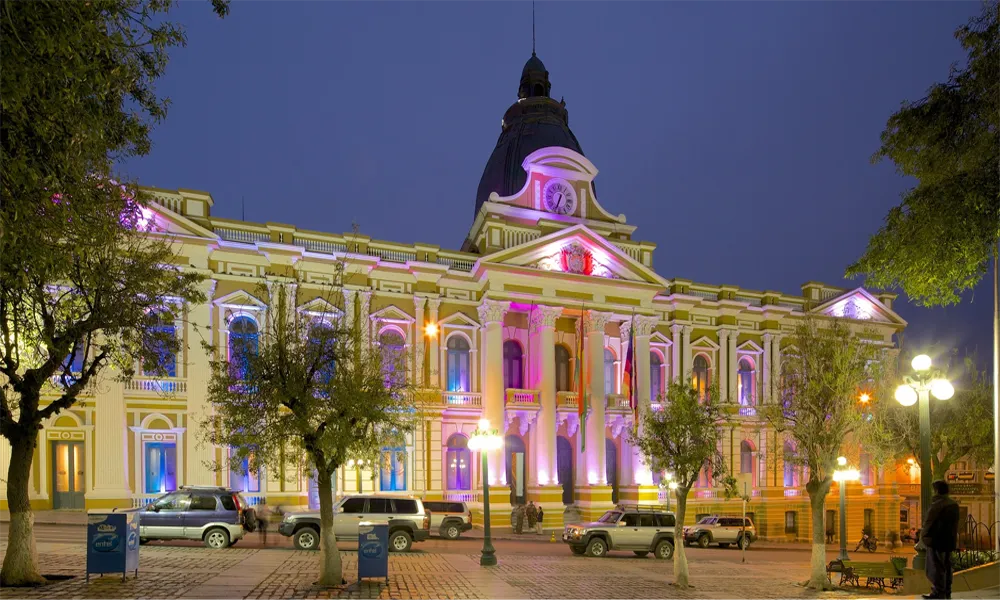
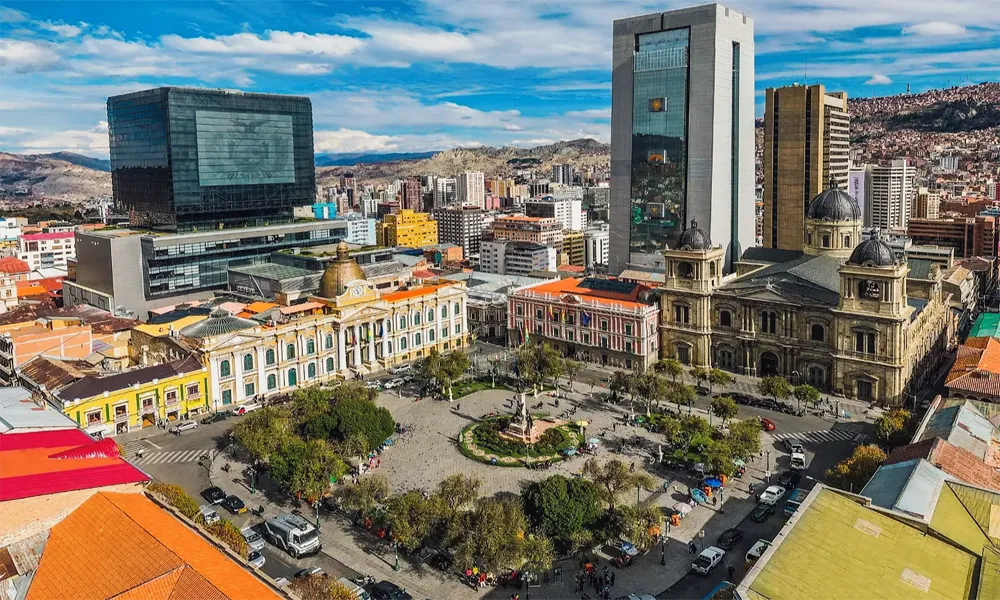
Plaza Pedro Domingo Murillo, popularly known as Plaza Murillo, is the main civic and historical space in the city of La Paz, Bolivia. This emblematic place concentrates political power, historical memory, and daily life in La Paz, making it an essential visit for those who wish to understand the essence of the country.
📜 History and origin of the plaza
The plaza was laid out in 1558, a few years after the founding of La Paz, following the Spanish colonial urban model that established a central plaza as the administrative, religious, and social hub. During the colonial era, it was known as Plaza Mayor and later Plaza de Armas, serving military, ceremonial, and commercial functions.
After the independence movements, the space acquired a strong patriotic significance. In 1909, the plaza officially adopted the name Plaza Pedro Domingo Murillo, in homage to the revolutionary leader from La Paz and precursor of South American independence.
🕊️ Pedro Domingo Murillo: The Hero Who Gave His Name to the Plaza
Pedro Domingo Murillo was one of the main figures in the uprising of July 16, 1809, considered one of the first cries for freedom in the Americas. Murillo led a revolution against Spanish rule in La Paz, defending ideals of liberty and self-government.
Although he was captured and executed, his legacy has endured in Bolivian history. The plaza bears his name as a symbol of struggle, dignity, and freedom, and its central monument serves as a permanent reminder of his sacrifice.
🏗️ Architecture and Landmark Buildings
Pedro Domingo Murillo Square is surrounded by some of the most important buildings in the country, both politically and religiously.
- 🏛️ Government Palace
Traditionally known as the Burnt Palace, it is the historic seat of the Executive Branch. Its name comes from a fire that occurred in the 19th century during an attempted coup. The building has witnessed countless political events that shaped the course of Bolivia.
- 🏛️ Plurinational Legislative Assembly
This building houses the country’s legislative body. Its presence in the square reinforces the institutional character of the space and represents democratic debate and the creation of laws in Bolivia.
- ⛪ Metropolitan Cathedral of Our Lady of La Paz
The Metropolitan Cathedral of Our Lady of La Paz stands out for its imposing neoclassical façade and its solemn interior. It is one of the city’s main religious temples and a symbol of the Catholic faith in the Bolivian highlands.
- 🗿 Monument to Pedro Domingo Murillo
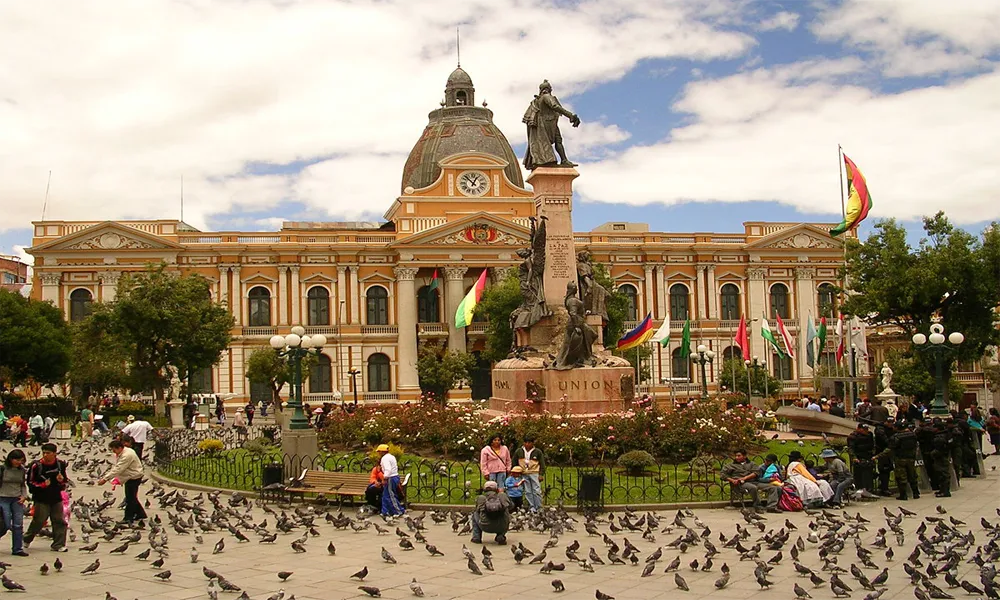
Located in the center of the plaza, this monument honors the liberation hero. The sculpture depicts Murillo alongside allegorical figures symbolizing liberty, homeland, and courage, making it the focal point of the space.
- 🌳 The Plaza as a Social and Cultural Space
Beyond its historical significance, Plaza Murillo is a vibrant space. Every day, residents stroll, government officials move between official buildings, tourists photograph the architecture, and pigeons become part of the traditional scene.
The plaza has also been the site of demonstrations, civic celebrations, official ceremonies, and key historical events, reinforcing its role as the political and social heart of Bolivia.
📸 What to do during your visit
- Walk around the plaza and admire the architectural details of the historic buildings.
- Photograph the central monument and the colonial facades.
- Visit the cathedral and appreciate its interior.
- Explore the surroundings of La Paz’s historic center.
- Experience the daily atmosphere where history, politics, and urban life coexist.
⏰ Best time to visit
The plaza can be visited throughout the day, although mornings and afternoons offer ideal light for photography and a more tranquil atmosphere. On weekdays, the bustling activity allows you to observe the country’s political dynamics in real time.
✨ Cultural and symbolic importance
Plaza Pedro Domingo Murillo is not only a tourist attraction but also a national symbol. It represents the struggle for independence, the exercise of democratic power, and the historical memory of Bolivia. Every building, statue, and corner tells a part of the country’s story.