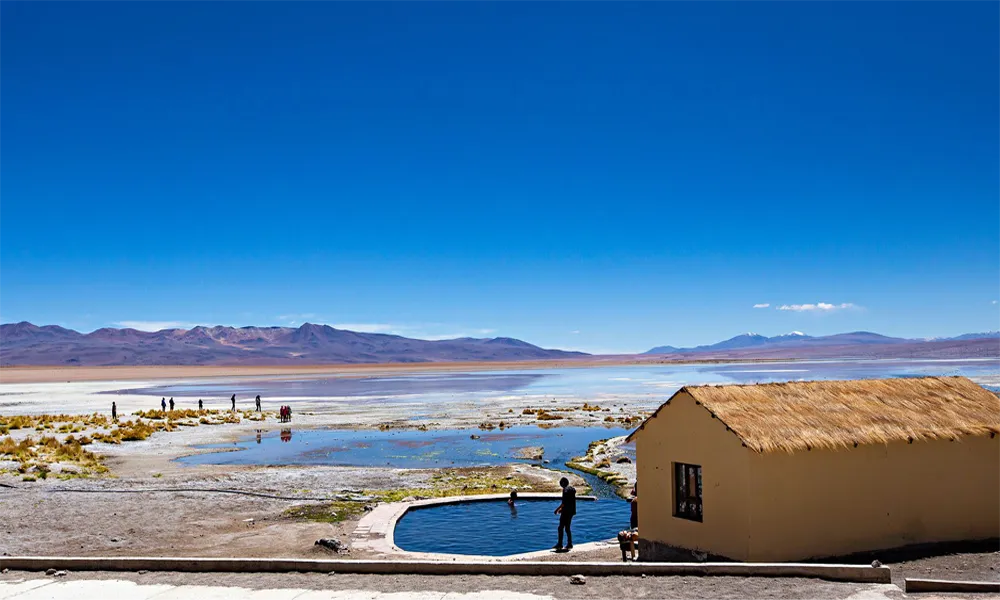

Polques Hot Springs – An oasis in the middle of the Uyuni plateau
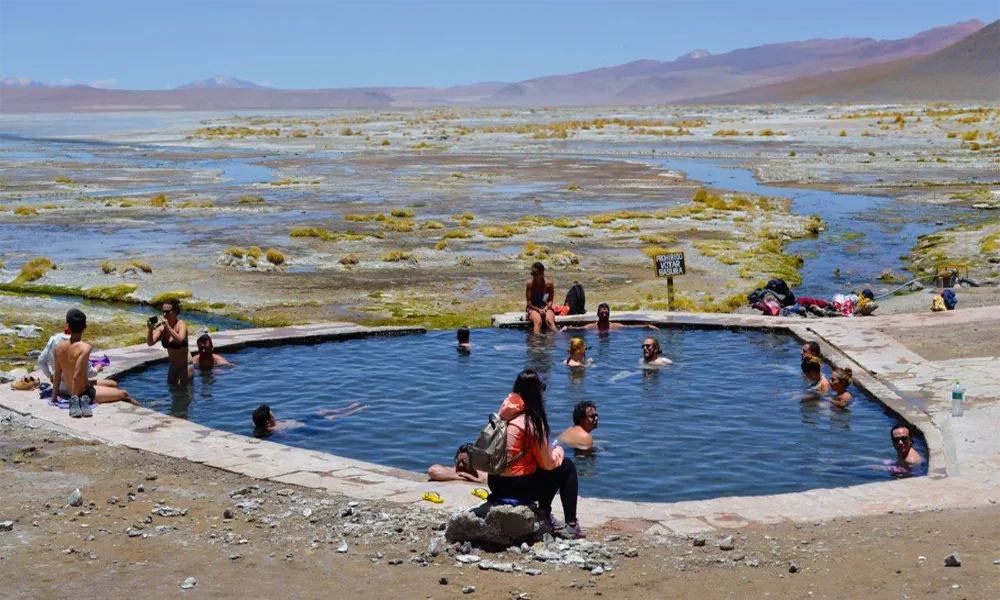
The Polques Hot Springs are one of the most relaxing spots on the tour of the Salar de Uyuni and the Eduardo Avaroa Andean Fauna National Reserve. Amidst an extreme volcanic landscape, these natural pools offer a unique experience: immersing yourself in warm waters while the cold of the Altiplano and the surrounding volcanoes frame the scenery.
Located at over 4,300 meters above sea level, the Polques Hot Springs are a must-see stop on multi-day tours of Uyuni, especially at dawn or at the end of a demanding day.
📍Location and How to Get to the Polques Hot Springs
The Polques Hot Springs are located within the Eduardo Avaroa National Reserve, near the Sol de Mañana geothermal field and the Siloli Desert. Access is only possible via 4×4 vehicles, as part of organized tours from Uyuni or San Pedro de Atacama.
There is no public transportation or recommended independent access due to the altitude, climate, and challenging terrain.
🏞️What are the Polques Hot Springs?
Polques is a series of natural pools of volcanic origin, whose waters emerge at temperatures ranging from 30°C to 38°C. These waters are rich in minerals such as sulfur and other natural compounds, known for their relaxing and therapeutic properties.
The pools are located next to a salt lagoon, creating a stunning contrast between the hot water, the cool air, and the Andean landscape.
Polques Bathing Experience
Bathing in Polques is a brief but intense experience. Most tours offer between 30 and 45 minutes to enjoy the hot springs, enough time to relax your muscles after long journeys across the high plateau.
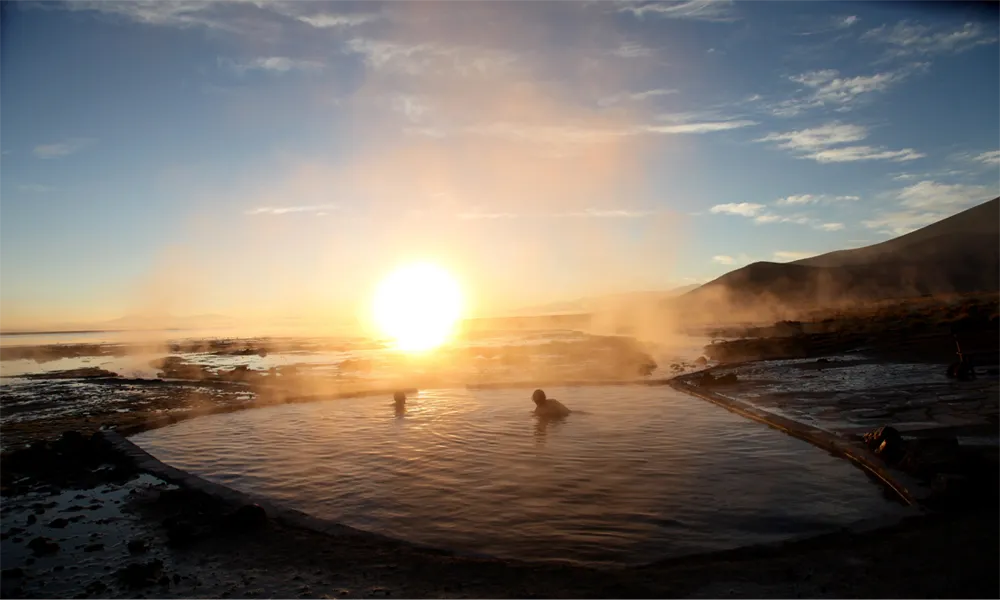
The best time to enter is at dawn, when the steam rises and the temperature contrast creates a magical atmosphere.
🦩Biodiversity around Polques
Although the surroundings appear arid, the area around Polques is home to life adapted to the high altitude:
Fauna
- Flamingos in the nearby lagoon
- Vicuñas and llamas
- Andean foxes
- High-altitude birds
Flora
- Tough grasses
- Wild grasses
- Vegetation resistant to saline soils
🌤️Climate and best time to visit Polques
- Dry season (April to November): More stable access and more predictable weather.
- Rainy season (January to March): Greener landscapes, but with possible access restrictions.
Outdoor temperatures can drop to -10°C, even during the day.
📖Recommendations
- Bring a swimsuit, towel, and sandals. Enter and exit the water slowly to avoid altitude sickness.
- Do not stay in the hot water for more than 20 continuous minutes.
- Put on warm clothing immediately upon exiting.
- Respect the rules of the protected area.
❓Frequently Asked Questions
- Is there an entrance fee?
It is generally included in tours, but independently it has a small cost (approx. 6–10 Bolivianos).
- When is the best time to visit?
Early morning, when the contrast between the cold air and the hot water is most enjoyable.
- Is it safe to bathe in the hot springs?
Yes, the water is clean and safe; It is only recommended to avoid prolonged exposure to the altitude to prevent dizziness.
- What to bring on the tour?
Swimsuit, sandals, towel, sunscreen, water, and thermal clothing for after swimming.