
Sajama National Park in Oruro: Sacred Nature of the Bolivian Altiplano
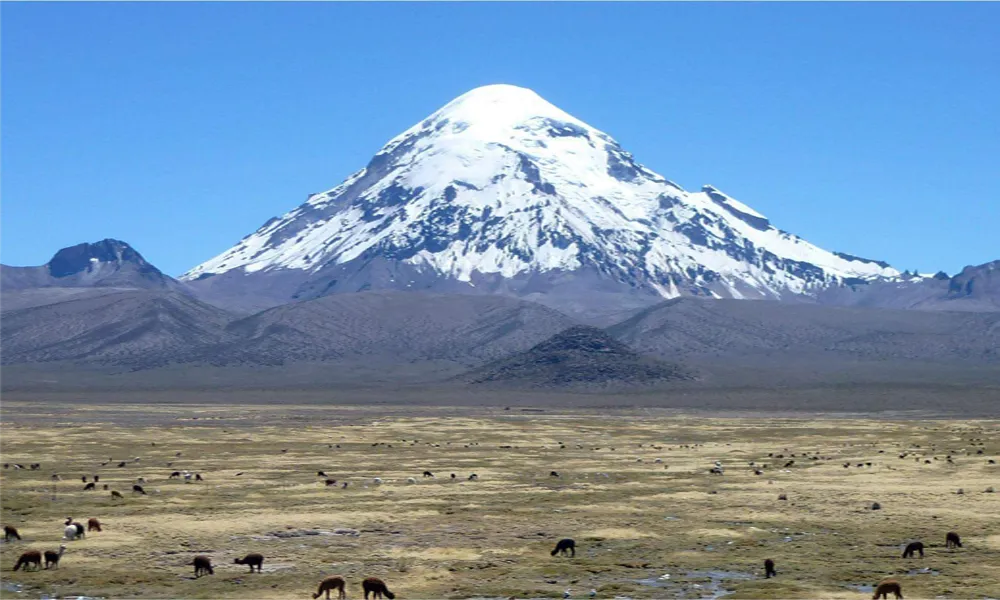
Sajama National Park is the oldest protected area in Bolivia and one of the most impressive natural spaces in the Andean highlands. Located in the department of Oruro, this park safeguards volcanic landscapes, snow-capped mountains, vast high Andean plains, and unique biodiversity, deeply connected to the ancestral worldview of the Andean communities.
📍 Location and Access
- Department: Oruro, Sajama Province
- Distance from La Paz: Approximately 270 km (5 to 6 hours by road)
- Access: La Paz – Oruro – Patacamaya – Tambo Quemado Highway. From there, you enter the community of Sajama, the park’s main entrance.
🌄 Climate
- Altitude: Between 4,200 and 6,542 meters above sea level
- Average temperature: 5°C to 15°C during the day, with very cold nights below 0°C.
- Best time to travel: Dry season (May to September), with clear skies and better visibility for trekking and mountaineering.
🌋 Sajama Mountain: Guardian of the Andes
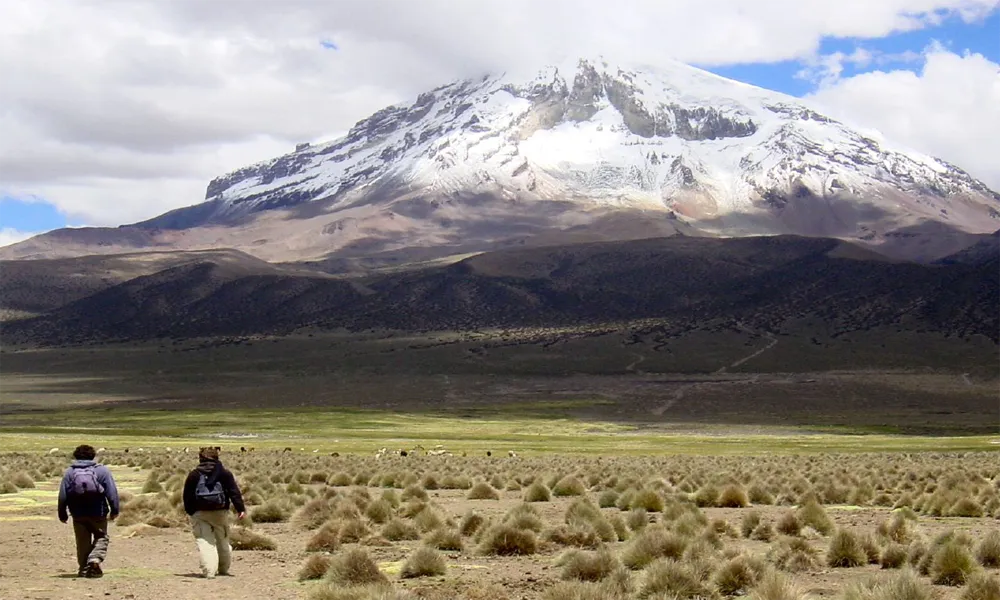
The park’s main emblem is Sajama Mountain, the highest mountain in Bolivia, which rises majestically above the Altiplano. Considered a sacred mountain since pre-Hispanic times, Sajama is seen as a spiritual protector of the territory. Its snow-capped silhouette dominates the landscape and defines the majestic and solemn character of the park.
🌿 Landscapes and ecosystems
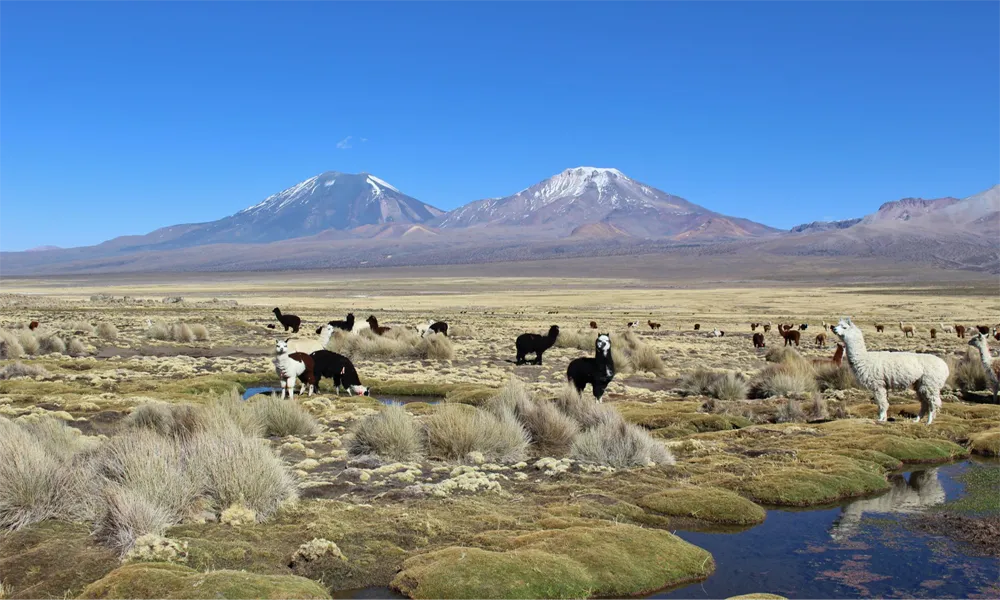
Sajama National Park is characterized by vast plains covered in ichu grass, high-altitude wetlands, and queñua forests, considered the tallest in the world. These ecosystems play a vital role in water regulation and the conservation of biodiversity in the Andean highlands.
The contrast between volcanoes, mountains, wetlands, and intensely blue skies makes Sajama a natural landscape of extraordinary beauty.
🦙 Wildlife
The park is home to a remarkable variety of Andean fauna. Among the most representative species are vicuñas, llamas, alpacas, Andean foxes, and viscachas. It is also a habitat for emblematic birds such as the Andean condor, flamingos, rheas, and various species of Andean ducks.
Wildlife observation takes place in a nearly pristine natural environment, which reinforces the ecological value of the protected area.
♨️ Hot Springs and Geysers
One of the great attractions of Sajama National Park is its natural hot springs, fed by underground volcanic activity. These hot pools offer a unique relaxation experience, especially in contrast to the cold climate of the high plateau.
In addition, the park boasts geysers and fumaroles that demonstrate the intense geothermal activity of the area, contributing a scientific and scenic component of great interest.
🪶 Living Culture and Spirituality
Aymara communities live within and around the park, keeping their ancestral traditions alive. The relationship with the land, the mountains, and the guardian spirits is an essential part of daily life. Rituals, offerings, and traditional agricultural practices reflect a profound harmony between humankind and nature.
Sajama is not only a natural space but also a sacred territory where culture and landscape intertwine.
🌱 Conservation and Responsible Tourism
Sajama National Park plays a fundamental role in the conservation of high Andean ecosystems and the protection of endangered species. Visiting this area requires a responsible attitude, respecting the fauna, flora, and local traditions.
Sustainable tourism allows us to appreciate this natural and cultural heritage without compromising its ecological balance.
🎒 Tourist Activities
- Trekking and Hiking: Hikes to queñua forests, lagoons, and viewpoints.
- Mountaineering: Ascent of Sajama Mountain (requires acclimatization and specialized guides).
- Wildlife Watching: Ideal for nature photographers.
- Cultural Tourism: Visit to local Aymara communities and exploration of chullpas (pre-Incan burial towers).
- Relaxation in Hot Springs: A revitalizing experience after hiking.
🏨 Recommended Accommodation
- Community-run accommodations in Sajama: Rustic and eco-friendly lodgings managed by Aymara families.
- Eco-lodges and local cabins: Offering basic services and experiential tourism.
🍲 Local Cuisine
- Sajama’s cuisine reflects the traditions of the Altiplano:
Quinoa soup and charque (dried llama meat). - Calapurka (thick soup cooked with hot stones).
- Muña and coca infusions to combat altitude sickness.
✅ Travel Tips
- Bring warm clothing in layers (sunny days and very cold nights).
- Protect yourself from the sun with sunscreen and UV sunglasses.
- Acclimatize before high-altitude activities.
- Support local communities by hiring local guides and accommodations.
✨ A Natural Sanctuary in Bolivia
Sajama National Park is one of the great natural treasures of Oruro and Bolivia. Its combination of sacred mountains, biodiversity, extreme landscapes, and vibrant culture makes it a unique destination for those seeking authentic, profound experiences in direct contact with the essence of the Andean highlands.