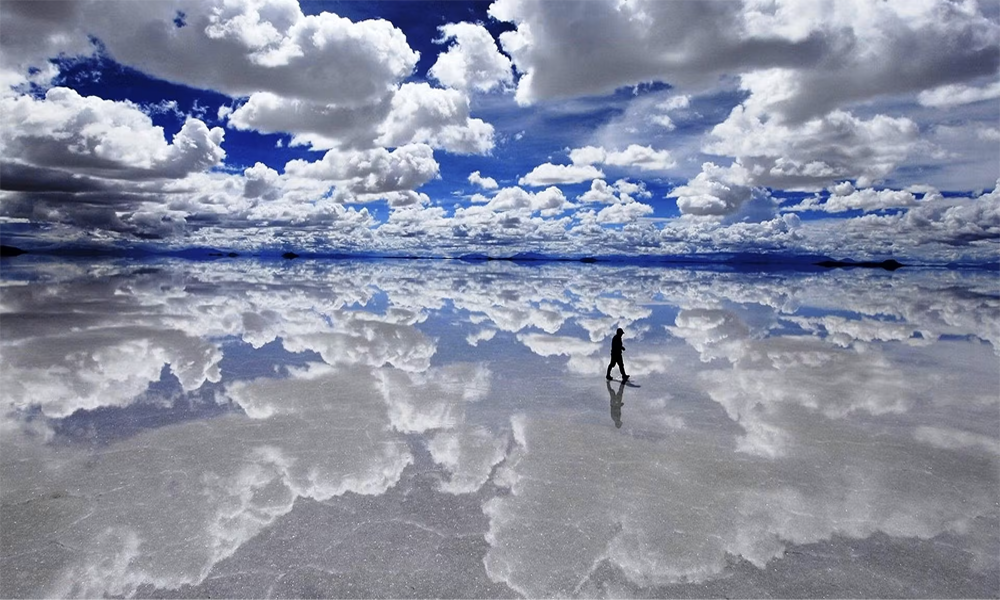

Salar de Uyuni: A Complete Guide for Travelers
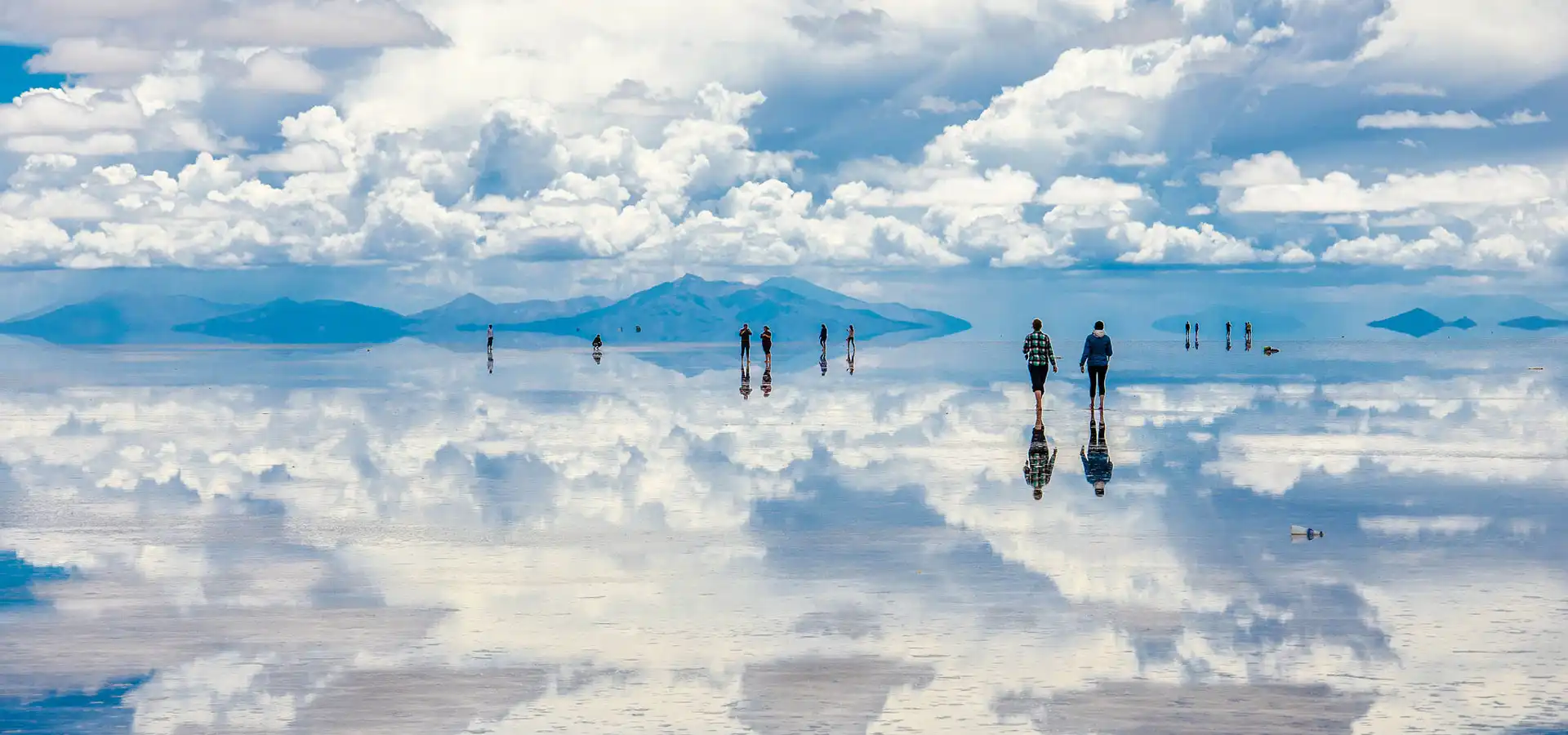
The Salar de Uyuni is one of the most extraordinary landscapes on the planet. Its immense white expanse, seemingly endless, creates a sense of unreality that captivates travelers from all over the world. Located in the heart of the Bolivian Altiplano, this salt flat stands out not only for its visual beauty but also for its geological, ecological, cultural, and economic importance.
More than just a tourist destination, the Salar de Uyuni is a living space where thousands of years of natural history, Andean traditions, and unique phenomena converge, phenomena found nowhere else in the world.
📍Geographic Location of the Salar de Uyuni
The Salar de Uyuni is located in southwestern Bolivia, within the department of Potosí, at an average altitude of 3,650 meters above sea level.
Area: approx. 10,582 km²
Base city: Uyuni
Natural region: Bolivian Altiplano
Main access: by land from Uyuni
It is the largest salt flat on the planet and one of the flattest points on Earth, even used to calibrate satellites.
🌋Geological origin: how the Salar de Uyuni was formed
The Salar de Uyuni is the result of a long geological process that began more than 30,000 years ago, when this region was covered by enormous prehistoric lakes, such as Lake Minchin and later Lake Tauca.
As these lakes evaporated:
- Thick layers of salt were deposited.
- Minerals became concentrated in the subsoil.
- A uniform salt crust formed.
Beneath the surface of the salt flat are:
- Salt layers up to 10 meters thick.
- Underground brine.
- One of the world’s largest lithium reserves.
This origin makes the salt flat a unique and strategic ecosystem.
🌈 Two faces of the Salar de Uyuni: dry and mirror
The Salar de Uyuni offers two completely different experiences depending on the time of year.
🤍 Dry season (April – November)
- Solid salt surface.
- Formation of natural hexagons.
- Ideal for perspective photography.
- Easier access.
✨ Rainy season (December – March)
- Thin layer of water.
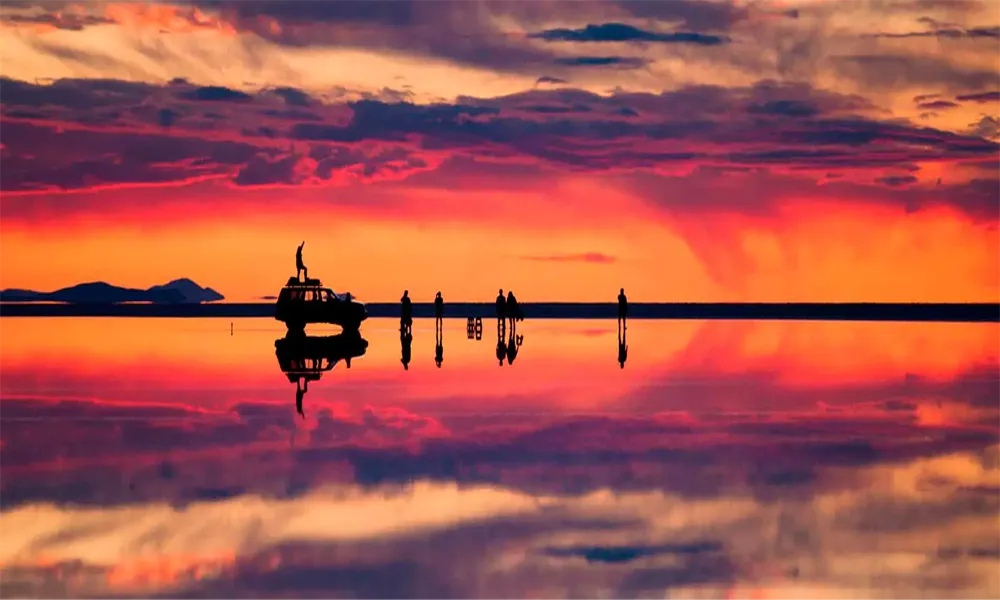
- Famous mirror effect.
- Perfect reflections of the sky.
- A unique visual experience.
Both seasons have their own charm and attract different types of travelers.
🗺️ Main attractions of the Salar de Uyuni
- 🚂 Train Cemetery
Abandoned vintage locomotives that tell the story of Bolivia’s railway and mining history.
- 🚩 Forest of Flags
A symbolic space where travelers from all over the world leave flags as a memento of their visit.
- 🧂 Salt Eyes
Natural brine springs that regulate the internal balance of the salt flat.
- 🏝️ Incahuasi Island
A rocky island with giant cacti and panoramic views of the salt flat.
- 🏠 Salt Hotels
Unique buildings made almost entirely of salt blocks.
🌵Flora and Fauna of the Salar de Uyuni
Although it seems like an inhospitable place, the salt flat is home to life adapted to extreme conditions.
Fauna:
- Andean, Chilean, and James’s flamingos
- Vicuñas in nearby areas
- Migratory birds
Flora:
- Giant cacti on Incahuasi Island
- Minimal vegetation adapted to salinity
This biodiversity makes the salt flat a fragile ecosystem that requires protection.
🏨 Lodging and Services
In Uyuni and nearby communities, there are salt hotels, rustic accommodations, and tourist lodges. Salt hotels offer a unique experience, with walls, beds, and tables built from blocks of salt.
🍽 Local Cuisine
During tours, it’s common to sample royal quinoa, grilled llama, traditional soups, and coca tea to alleviate altitude sickness.
🌌 Nighttime Experience
The sky above the Salar de Uyuni is one of the clearest on the planet. On clear nights, you can see the Milky Way and thousands of stars without light pollution.
⏰ Best Time to Visit the Salar de Uyuni
Months Experience
- Dec – Mar Mirror Effect
- Apr – Jun Transition
- Jul – Nov Dry Salt and Hexagons
The choice depends on whether you prefer reflections or a solid surface.
🎒 Practical Tips for Visiting the Salar de Uyuni
- Dress warmly: nights are very cold
- Use sunscreen and UV sunglasses
- Bring water and snacks
- Protect cameras and cell phones
- Walk slowly at high altitude
- Always follow the guide’s instructions