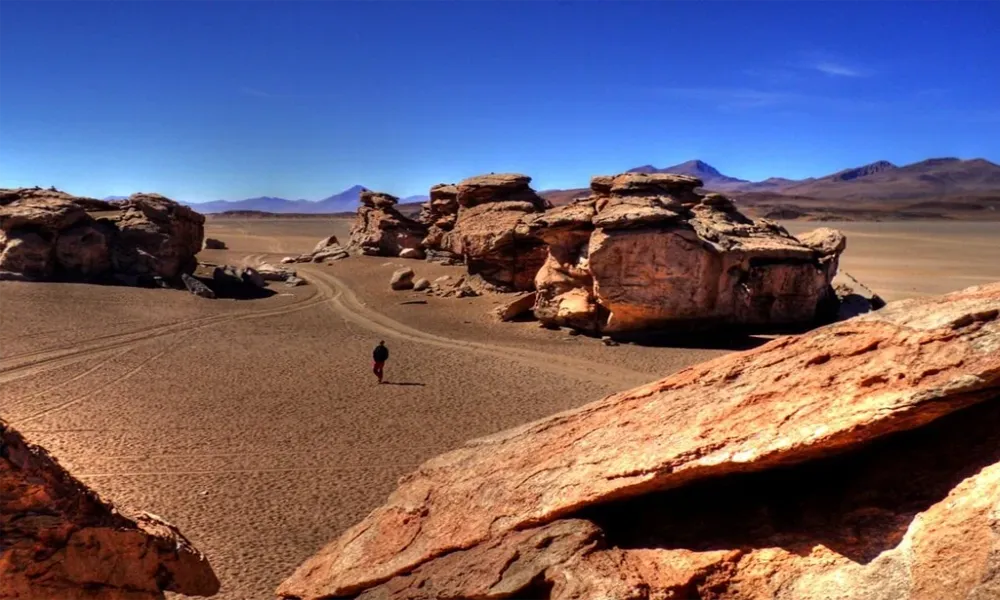

Siloli Desert – Uyuni
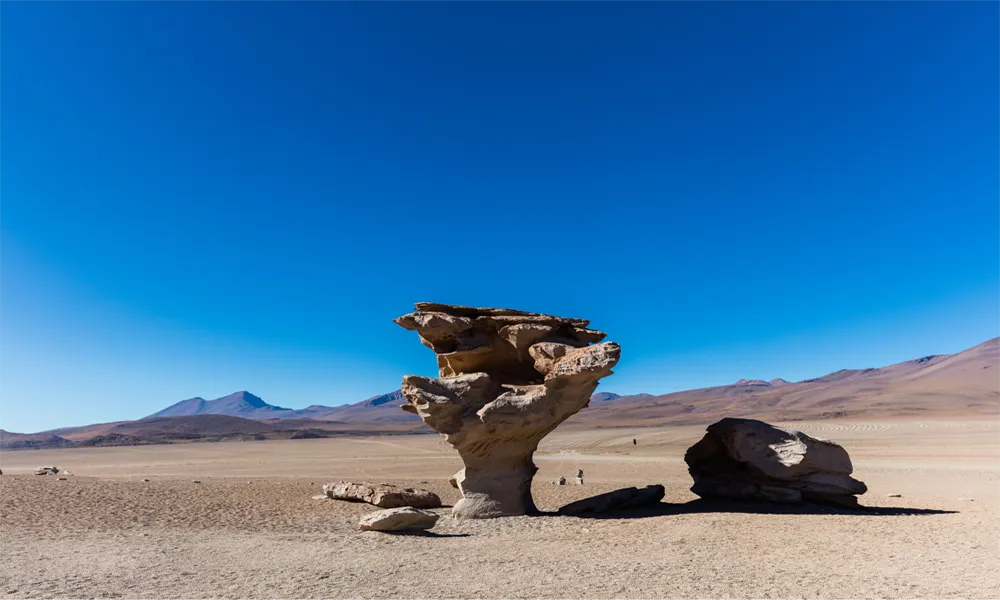
The Siloli Desert is one of the most impressive and photogenic landscapes in southwestern Bolivia. Located within the Eduardo Avaroa Andean Fauna National Reserve, this high-altitude desert is striking for its wind-sculpted rock formations, extreme climate, and almost surreal atmosphere. It’s a must-see stop on tours to the Salar de Uyuni and one of the most breathtaking scenery on the Andean plateau.
At over 4,500 meters above sea level, the Siloli Desert offers a unique experience: absolute silence, intense skies, and natural sculptures that seem otherworldly.
📍Location and how to get to the Siloli Desert
The Siloli Desert is located south of the Salar de Uyuni, in the department of Potosí, very close to the border with Chile. It’s part of the southern route that connects Uyuni with the Eduardo Avaroa Reserve and San Pedro de Atacama.
Access is exclusively by 4×4 vehicles, as part of organized 2, 3, or 4-day tours from Uyuni or Atacama. There are no paved roads or direct public transportation.
🌳Stone Tree: The Icon of the Siloli Desert
The most famous attraction of the Siloli Desert is the Stone Tree, a natural rock formation approximately 5 meters high, eroded by thousands of years of constant wind. Its silhouette resembles a solitary tree in the middle of the desert, making it one of the most photographed symbols of Uyuni.
This geological phenomenon is a clear example of the power of wind erosion on the Altiplano.
⛰️Landscape and Geography of the Siloli Desert
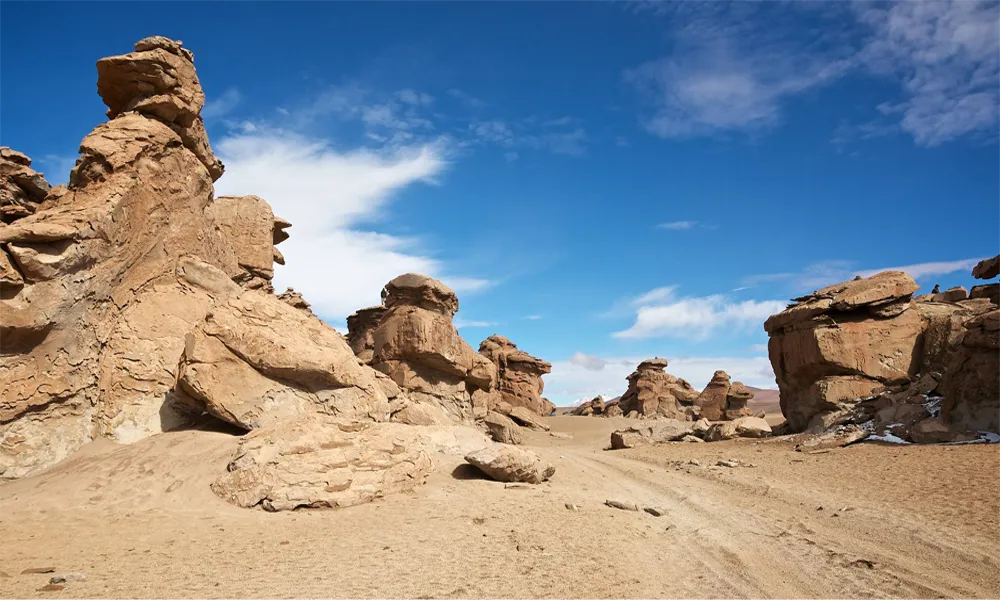
The Siloli Desert is not a traditional sand desert, but rather a vast expanse of volcanic soil, fine sand, and eroded rocks. The landscape is dominated by volcanoes, bare mountains, and vast plains that change color with the changing light.
Hues range from ochre and brown to reddish and gray, creating spectacular contrasts with the intense blue sky of the high plateau.
🦩Biodiversity of the Siloli Desert
Despite its arid appearance, the Siloli Desert is home to life adapted to extreme conditions:
Fauna
- Andean fox
- Vicuñas and wild llamas
- Occasional high-Andean birds
- Flamingos in nearby lagoons
Flora
- Yareta (a type of plant)
- Paja brava (a type of grass)
- High-Andean tough grasses
This biodiversity reinforces the ecological value of the desert within the Eduardo Avaroa National Reserve.
🌤️Climate and best time to visit
- Dry season (April to November): Better visibility and stable roads.
- Rainy season (January to March): More intense colors, although access is limited on some routes.
Temperatures can drop below -10°C, especially in the early morning and at night.
📖Recommendations
- Acclimate properly before the tour.
- Wear thermal clothing, a windbreaker, and sun protection.
- Avoid prolonged hikes due to the altitude.
- Do not climb or damage the rock formations.
- Always follow the guide’s instructions.
❓Frequently Asked Questions about the Siloli Desert
- Is the Siloli Desert inside the Salar de Uyuni?
Not directly. It is located south of the salt flat, within the Eduardo Avaroa National Reserve, and is part of the tour circuit.
- How long do we spend in Siloli?
Generally between 20 and 40 minutes, depending on the tour itinerary.
- Is it dangerous to visit Siloli?
No, as long as it’s done with an organized tour and safety recommendations are followed.
- Can it be visited without a tour?
It’s not recommended due to the lack of signage and the extreme environmental conditions.
- Is it suitable for photography?
Yes. It’s one of the best places for landscape and creative photography in Uyuni.