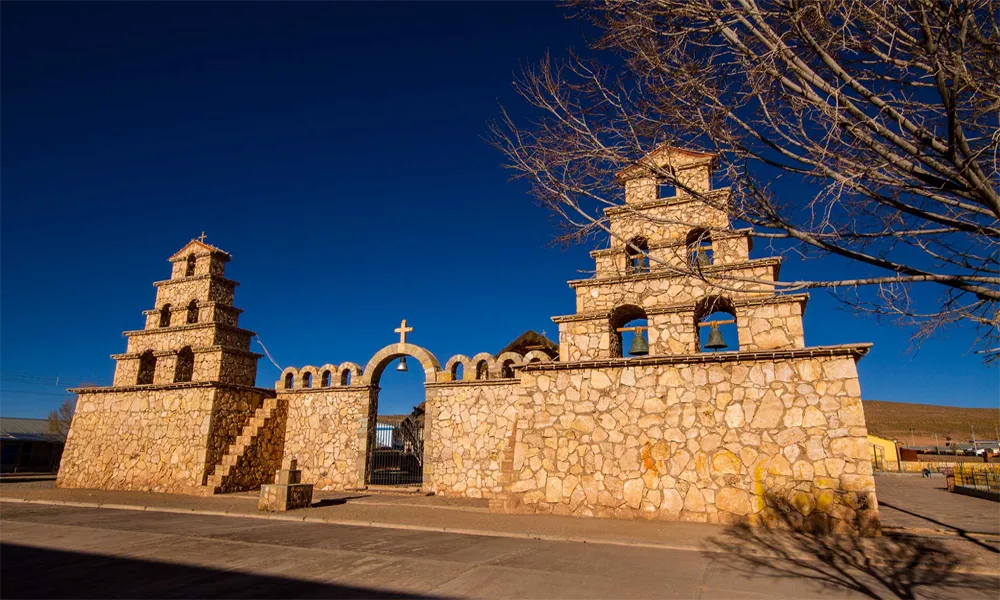

San Cristóbal Village, Uyuni – A cultural and historical gem in Bolivia
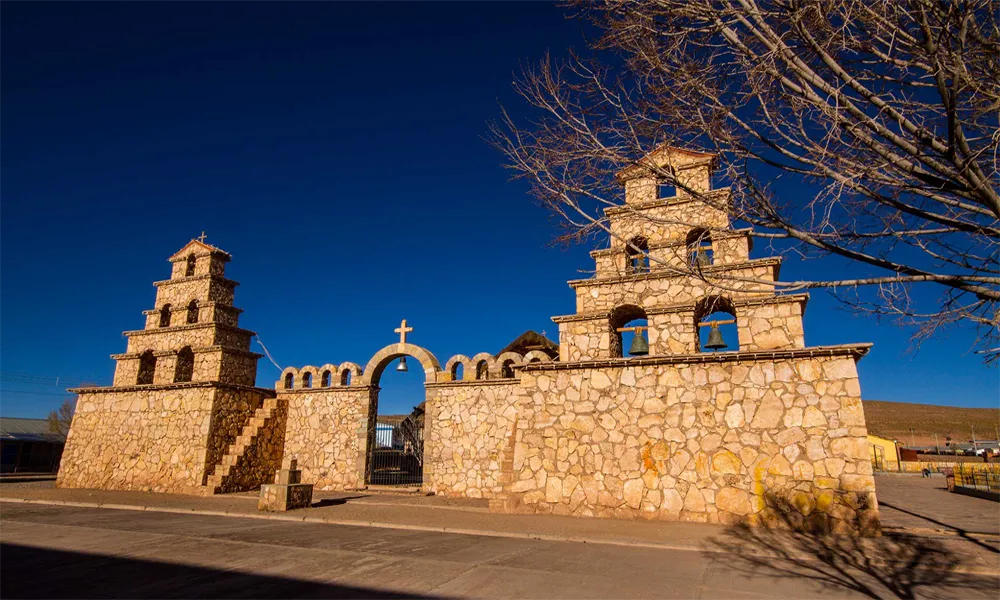
The town of San Cristóbal, located in the southern highlands of Bolivia, is one of the most unique places on the route to the Salar de Uyuni. At first glance, it may seem like a small Andean village, but its history, urban transformation, and connection to mining make it a unique case in South America.
Visiting San Cristóbal is to discover a town that was almost entirely relocated, preserving its cultural identity, its colonial church, and its traditions, amidst one of Bolivia’s most important mining projects.
📍Location and how to get to the town of San Cristóbal
San Cristóbal is located south of the Salar de Uyuni, in the department of Potosí, approximately 90 km from the city of Uyuni. It is a frequent stop on tours to the salt flats and the Eduardo Avaroa National Reserve.
Access is via a gravel road, generally in 4×4 vehicles as part of organized tours. There is no regular public transportation from Uyuni, so it is recommended to visit as part of a tourist circuit.
📜History of the Town of San Cristóbal
San Cristóbal is one of the oldest towns in the region, with pre-Hispanic and colonial origins. During the colonial era, it was an important mining settlement, linked to silver mining in the highlands.
At the end of the 20th century, the discovery of one of the world’s largest silver deposits led to the San Cristóbal Mining Project, which involved the planned relocation of the town to a new site. This process, uncommon in Latin America, allowed for the relocation of homes, plazas, and emblematic buildings while respecting the community’s social organization.
⛪The Church of San Cristóbal: Relocated Heritage
One of the town’s most prominent features is the Church of San Cristóbal, a 17th-century colonial building. Stone by stone, the church was dismantled and rebuilt in the new town, becoming a symbol of cultural resilience and heritage preservation.
Today, the church remains the spiritual and social center of the community and an interesting stop for those interested in learning about local history.
Local Life and Andean Culture
San Cristóbal keeps Andean traditions alive with religious celebrations, patron saint festivals, and activities related to llama and alpaca herding. Daily life unfolds in an austere environment, marked by the cold climate and high altitude, but with a strong sense of community.
During festivities, it is possible to witness traditional dances, Andean music, and rituals that blend Catholic beliefs with ancestral worldviews.
Landscape and Natural Environment
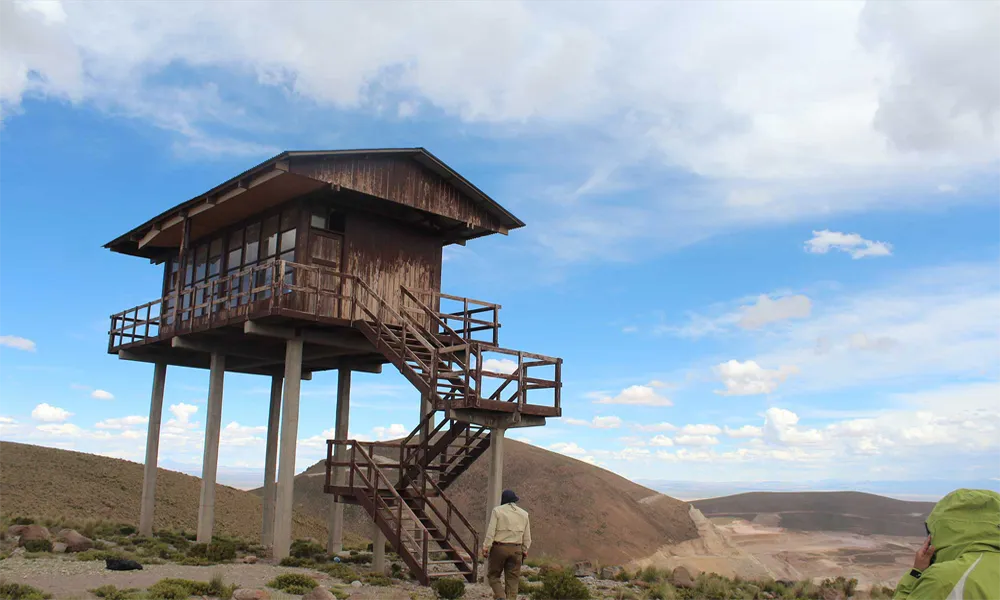
The landscape surrounding the town of San Cristóbal is typical of the Bolivian highlands: open plains, distant volcanoes, and vast skies. The feeling of isolation and silence is part of the area’s charm, ideal for those seeking authentic experiences off the beaten path.
⛰️Biodiversity
Although the landscape appears arid, the area surrounding the village is home to species adapted to the high altitude:
Fauna
- Llamas and alpacas
- Vicuñas in remote areas
- Andean foxes
- High-altitude birds
Flora
- Tough grasses
- Wild grass
- Yareta in rocky areas
⭐ Recommendations for travelers
- Bring warm, layered clothing, as the nights are very cold.
- Acclimate to the altitude before engaging in strenuous physical activity.
- Respect local traditions, especially during religious festivals.
- Have cash in Bolivian bolivianos, as ATMs are not always available.
- Combine your visit with a tour to the Salar de Uyuni, San Juan del Rosario, and the Laguna Route.
❓Frequently Asked Questions about San Cristóbal
- How do I get to San Cristóbal from Uyuni?
You can reach it by local bus or private vehicle by road, with a journey of about 2 hours.
- Is it worth visiting San Cristóbal on a tour from Uyuni?
Yes, especially if you want to learn about Andean culture and the region’s mining history. It’s an interesting stop for those who want a more comprehensive experience than just a tour of the Salar.
- What is the main attraction in San Cristóbal?
The colonial church, moved stone by stone, is the town’s historical gem, along with its traditional festivals.
- Can I visit the mine?
It’s generally not open to regular tourism, but there are community programs that include talks about mining and its impact.